The client asked where AI could help. We delivered what the business needed to scale.
A rapid operations assessment turned an automation request into a plan to grow the business while reducing complexity.
At a glance
Client: Founder of a growing handmade-product company
Engagement: Organizational operations assessment and systems mapping
Timeframe: Approximately 20 hours over three weeks
Participants: 20 employee survey respondents and three senior stakeholders
Fieldwork: Four-hour on-site contextual inquiry
Outcome: Two implementation projects approved
Challenge
The business wanted to grow without becoming harder to run.
The founder approached ENID to identify operational tasks that AI could automate. She wanted to improve business performance while reducing the day-to-day work she had to handle.
But automating individual tasks wouldn't necessarily make the business easier to run. Applied in the wrong places, automation could reinforce existing dependencies or make disconnected work move faster.
Before recommending technology, we helped the founder clarify what she ultimately wanted to achieve:
Grow into new regions while reducing operational complexity and preserving the quality and sustainability of handmade production.
Approach
Understanding what needed to change
ENID conducted a focused organizational operations assessment over three weeks, requiring approximately 20 hours of research, analysis, and synthesis.
The research included:
A survey completed by 20 employees
Interviews with three senior stakeholders
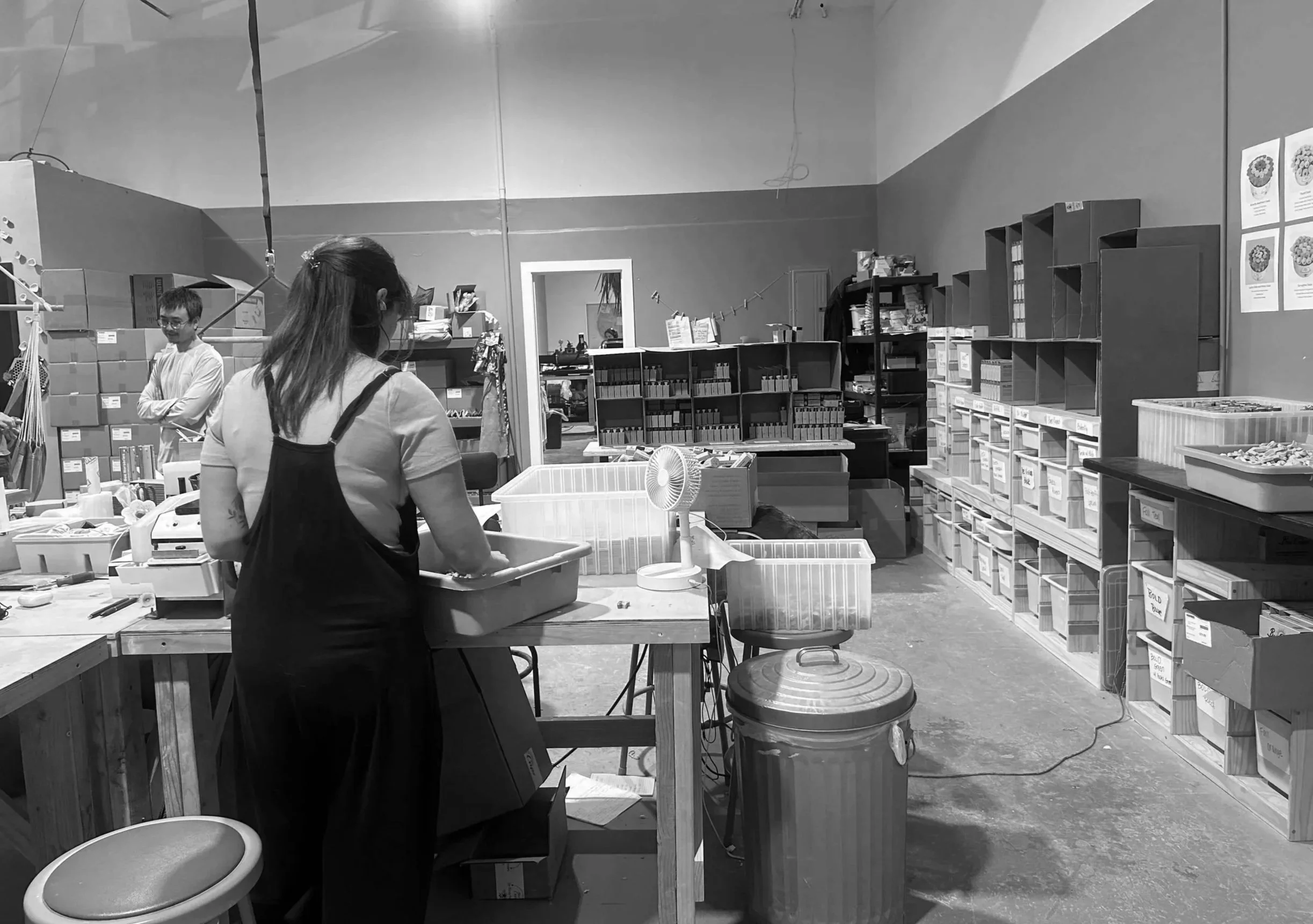
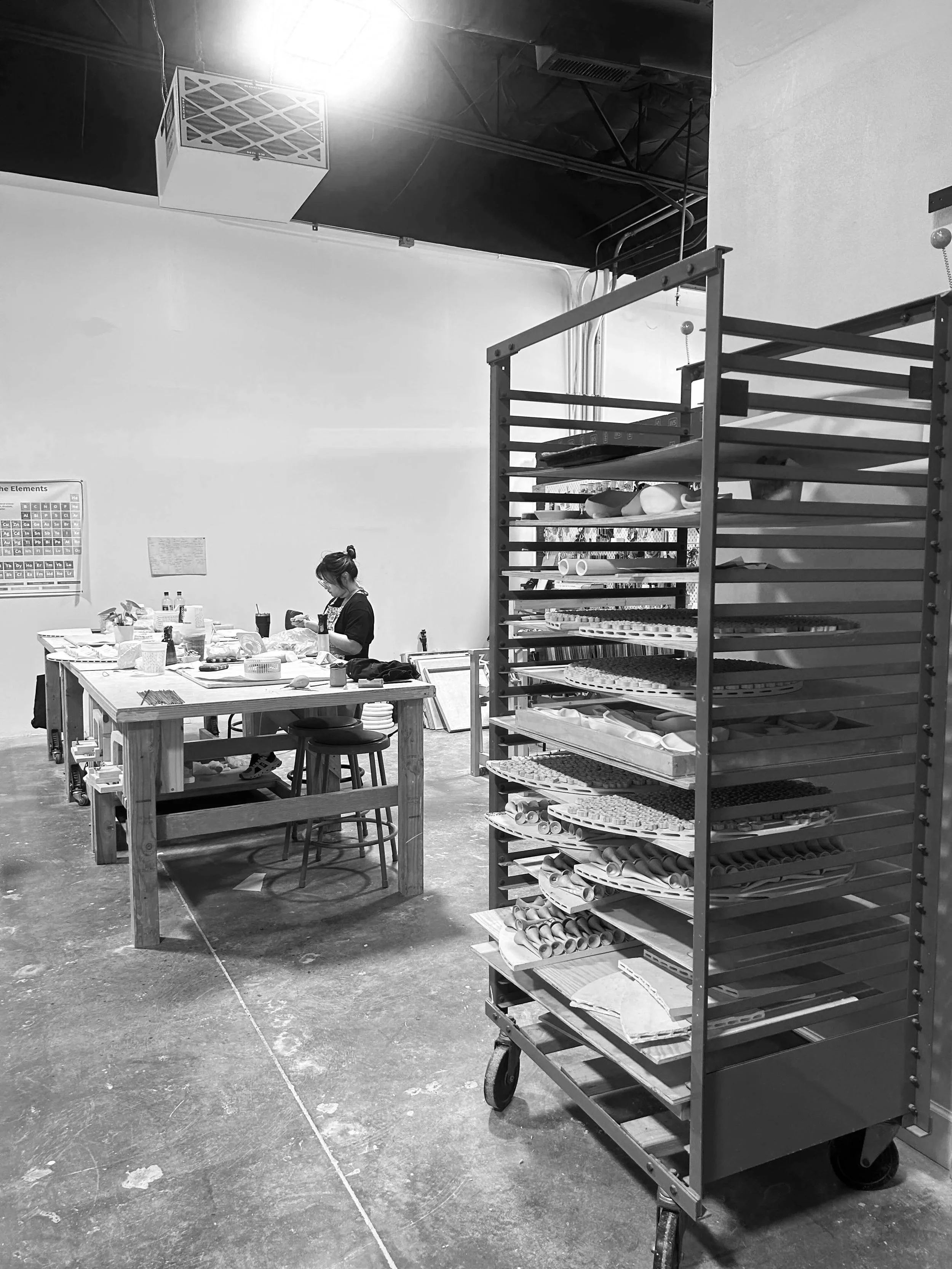
Four hours of contextual inquiry onsite, observing a typical day in the studio
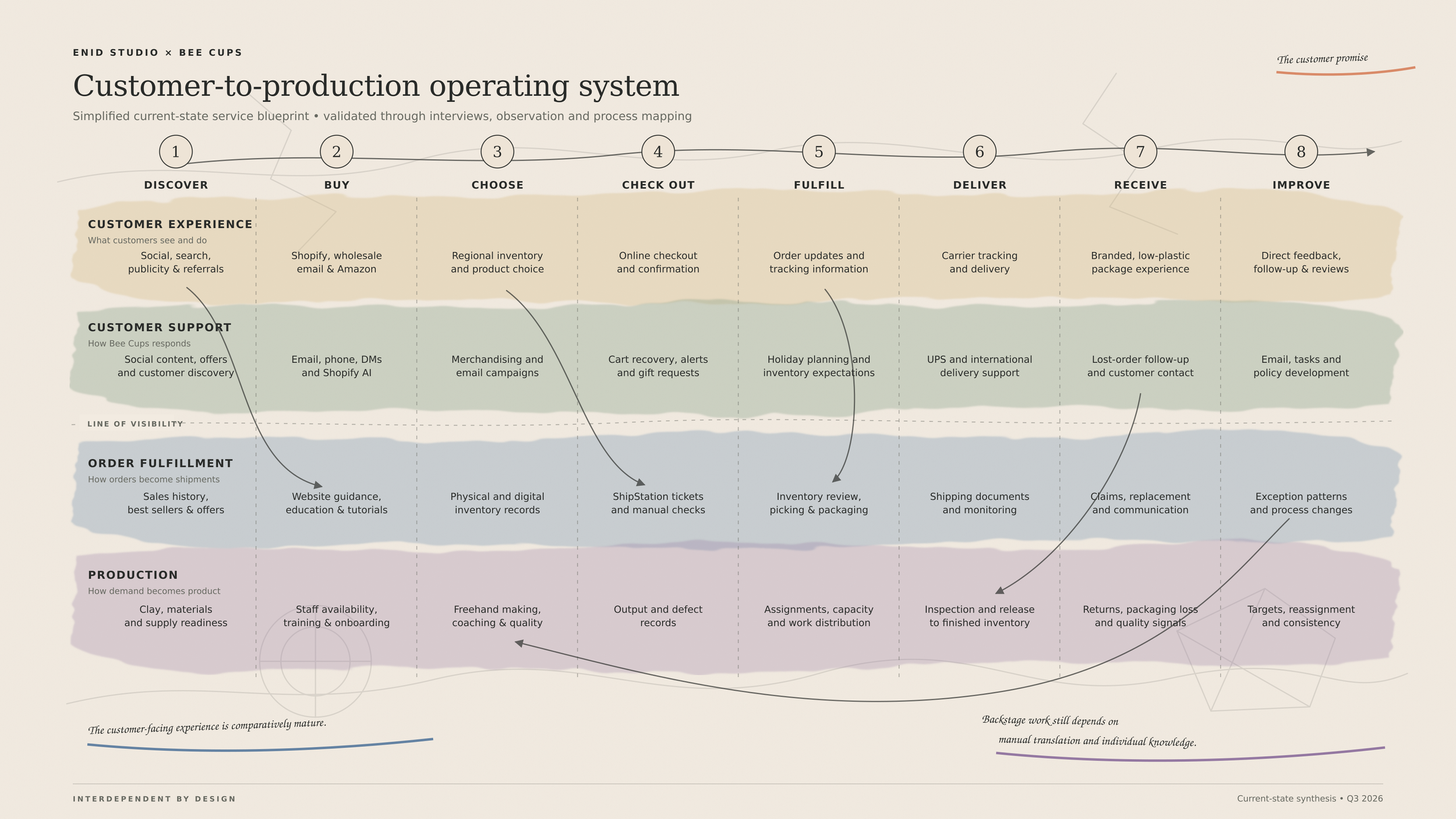
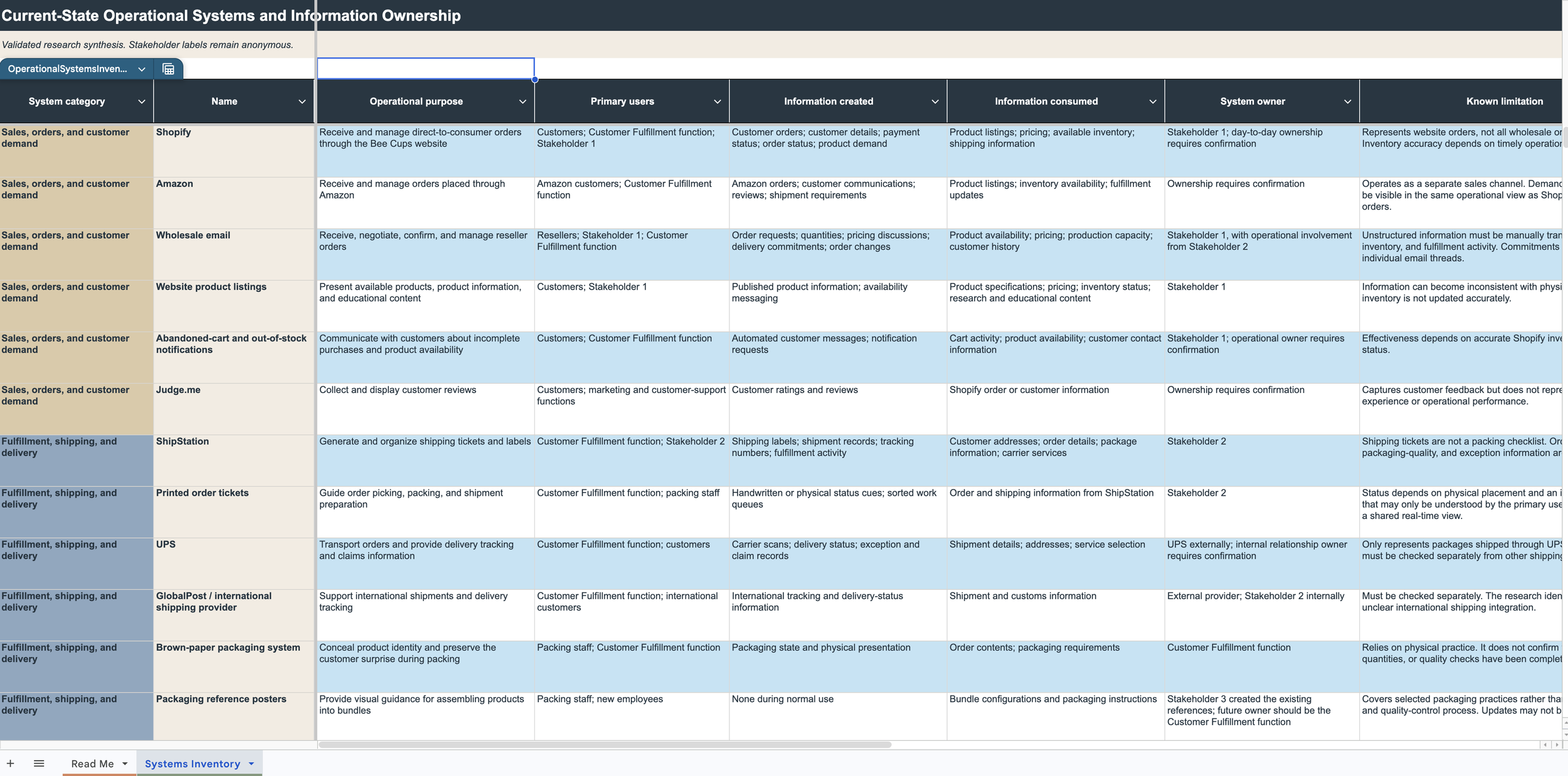
Operational systems mapping
Work-design analysis
Each method revealed a different part of the operation. The survey captured employees’ experiences across the business. Stakeholder interviews provided operational and strategic context. Contextual inquiry allowed us to compare what people described with how production, coordination, and decision-making unfolded during an ordinary working day.
Research and synthesis happened concurrently. Instead of attempting to document everything, we gathered enough evidence to determine:
What was working and should be preserved
Where complexity was affecting employees and performance
Which knowledge and decisions needed to become transferable
Which workflows and information needed to become more connected
Where technology could reduce unnecessary work
Where human skill and judgment remained essential
Insight
A strong business is supported by invisible work.
The company had strong foundations: a distinctive product, experienced employees, resilient leadership, and years of knowledge about handmade production.
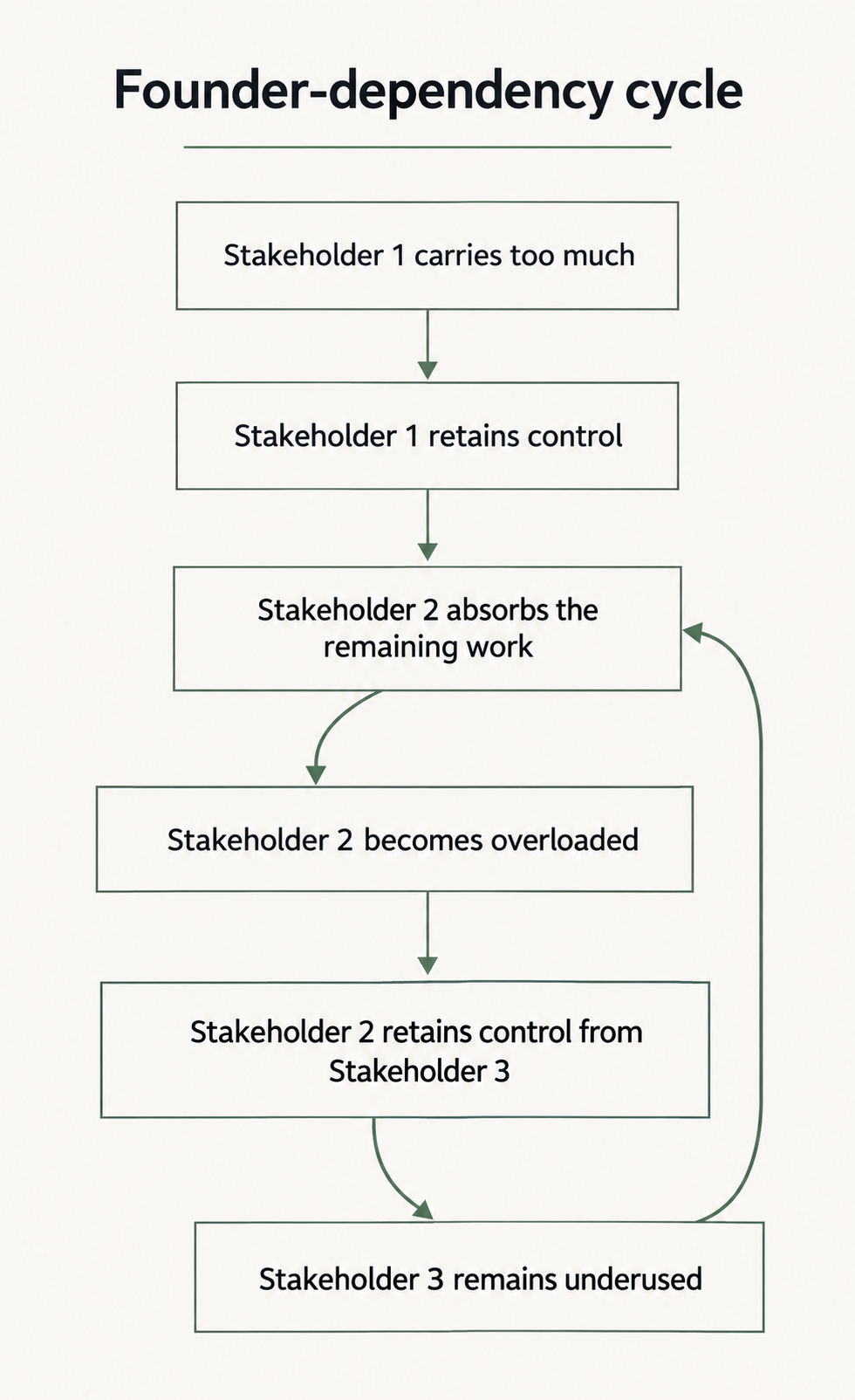
But much of that knowledge remained in people’s heads. Important decisions depended on the founder, responsibilities were unclear, and information didn't move smoothly across ordering, inventory, production, and fulfillment.
Employees sometimes waited for clarification. The founder intervened to prevent gaps. Her continued involvement reinforced the business’s dependence on her while limiting others' autonomy.
AI could automate isolated activities within this environment. It could not resolve the underlying relationships between knowledge, authority, workflow, and technology.
Opportunity
Growing without multiplying complexity
The assessment revealed a larger opportunity: the founder wanted to establish a production studio in the UK.
Producing regionally would expand the company’s footprint, bring production closer to customers, reduce shipping distances, and maintain a sustainable production model for a handmade product.
But reproducing the existing operation without first making it transferable would also reproduce its complexity.
The question changed from:
What can we automate?
to:
What must change so the business can grow without becoming harder to run?
Recommendations
Make the operating model transferable.
The first project will clarify roles and decision authority, capture essential operational knowledge, and establish the processes, quality standards, and training another regional team will need.
It will identify what must remain consistent across locations, what can be adapted locally, and where employees need the autonomy to exercise their judgment.
Contribution to the business objective: A new studio can reproduce what makes the existing operation successful without relying on the founder to transfer and personally oversee every practice.

Two initiatives moving toward a clearly defined business objective.
Connect operations and technology.
The second project will improve how information moves across orders, inventory, production planning, and fulfillment. It will establish clearer sources of truth while reducing duplicated work and missed handoffs.
Activities will be evaluated to determine whether they should:
Remain manual because they depend on skill or judgment.
Be supported by better information or decision tools.
Be simplified through system integration.
Be automated because they are repetitive and predictable.
Contribution to the business objective: Multiple studios can coordinate production without adding fragmented systems, unnecessary administration, or operational complexity.
A practical path from one studio to many
In approximately 20 hours, ENID transformed a technology-led request into:
A shared understanding of how the business operated
Evidence of what was working and what was limiting growth
A clearly defined objective for regional expansion
Two connected implementation projects
A practical basis for deciding what to preserve, support, integrate, or automate
The assessment did not produce a generic list of automation opportunities. It established what the business needed to become, and where people, work design, and technology each belonged in making that future possible.
The first project makes the business transferable. The second makes multiple locations connected. Together, they create an operating system for simpler, sustainable growth.