
Work Design
Every investment you make in technology changes the way work gets done.
Whether you're implementing AI, automating routine tasks, integrating new systems, or responding to changing customer expectations, you're not just introducing new tools. You're changing how people make decisions, collaborate, and create value.
Technology will continue to evolve. The organizations that thrive won't be the ones with the most tools—they'll be the ones that continually adapt.
What changes?
When work changes as a consequence of new technology, it's rarely just one process that needs attention. Work Design begins with understanding the current system and ends with a clear direction for change.
-
The challenge isn't adopting new technology. It's helping your organization evolve alongside it.
That means asking questions like:
Which tasks should be automated—and which still require human judgment?
How will roles and responsibilities need to evolve?
Where can your people create the greatest value as technology takes on more routine work?
What new skills will your teams need to succeed?
How do you help employees navigate change with clarity and confidence instead of uncertainty?
-
Work Design often includes decisions about:
Roles and responsibilities
Workflows and handoffs
Decision-making
Team structures
Customer and employee experiences
Technology adoption
Automation opportunities
AI-enabled ways of working
Governance
Knowledge sharing
Training and capability development
-
Work isn't something you redesign once. It's something you continuously improve as your organization scales, your people learn, and technology evolves.
-
Work Design is a collaborative process that brings together the people who understand your organization best.
Together, we'll:
Prioritize the opportunities identified during your Systems Assessment.
Explore how work, roles, and responsibilities may need to evolve.
Identify where automation, AI, or new technology can support people—not simply replace tasks.
Define the capabilities, skills, and support employees will need as work changes.
Design new workflows, decision-making processes, governance, or team structures where appropriate.
Develop a practical roadmap for implementation.
By the end of the process, you'll have a shared vision for how work can evolve—and a clear plan for making those changes with your people, not to them.
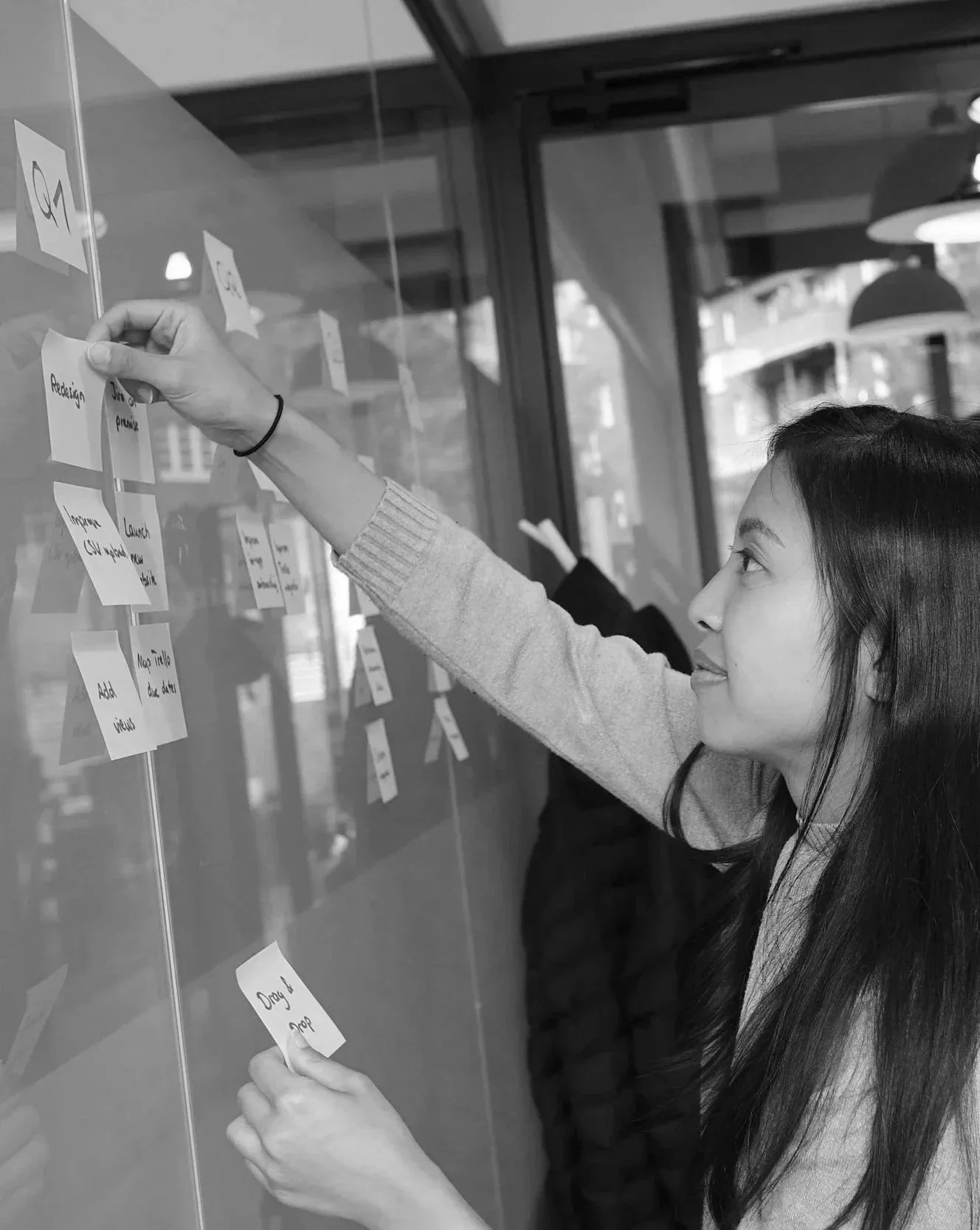
Work Design is where we decide how it should evolve.
Together, we work with leaders and employees to explore opportunities, evaluate trade-offs, and design practical improvements that align with your organization's goals, technology, and the people doing the work.
This isn't about redesigning everything.
It's about intentionally improving the parts of your organization that will create the greatest impact.
Designing work for the way your organization is evolving.
Making Strategic Investment Decisions
Are you changing intentionally, or simply reacting as change unfolds?
Work design is especially valuable when new technology is changing how work gets done. Organizations may need to redesign work when implementing AI or automation, replacing legacy systems, eliminating manual processes, improving cross-functional collaboration, clarifying decision ownership, or introducing new digital tools.
Rather than fitting new technology into old workflows, work design creates an opportunity to reconsider how people and technology can create better outcomes together.
Every investment you make in technology changes the way work gets done. A Work Design Strategy creates understanding of what changes will be necessary before changes are implemented.
Together, we validate what’s most important to the people closest to the work and prioritize initiatives with organizational leaders. Through participatory design methods, we create shared ownership, reduce implementation risk, and ensure future investments focus on the opportunities with the greatest potential impact—whether those initiatives are delivered by ENID, your internal team, or another trusted partner.
Work smarter,
not harder.
Organizations invest heavily in technology, yet many continue to rely on workflows that were designed for a different era.
As software becomes more dynamic and more connected, new opportunities emerge to reduce manual work, improve collaboration, and make better decisions. Realizing those opportunities often requires rethinking how work flows across teams—not because the old way was wrong, but because new possibilities now exist.