
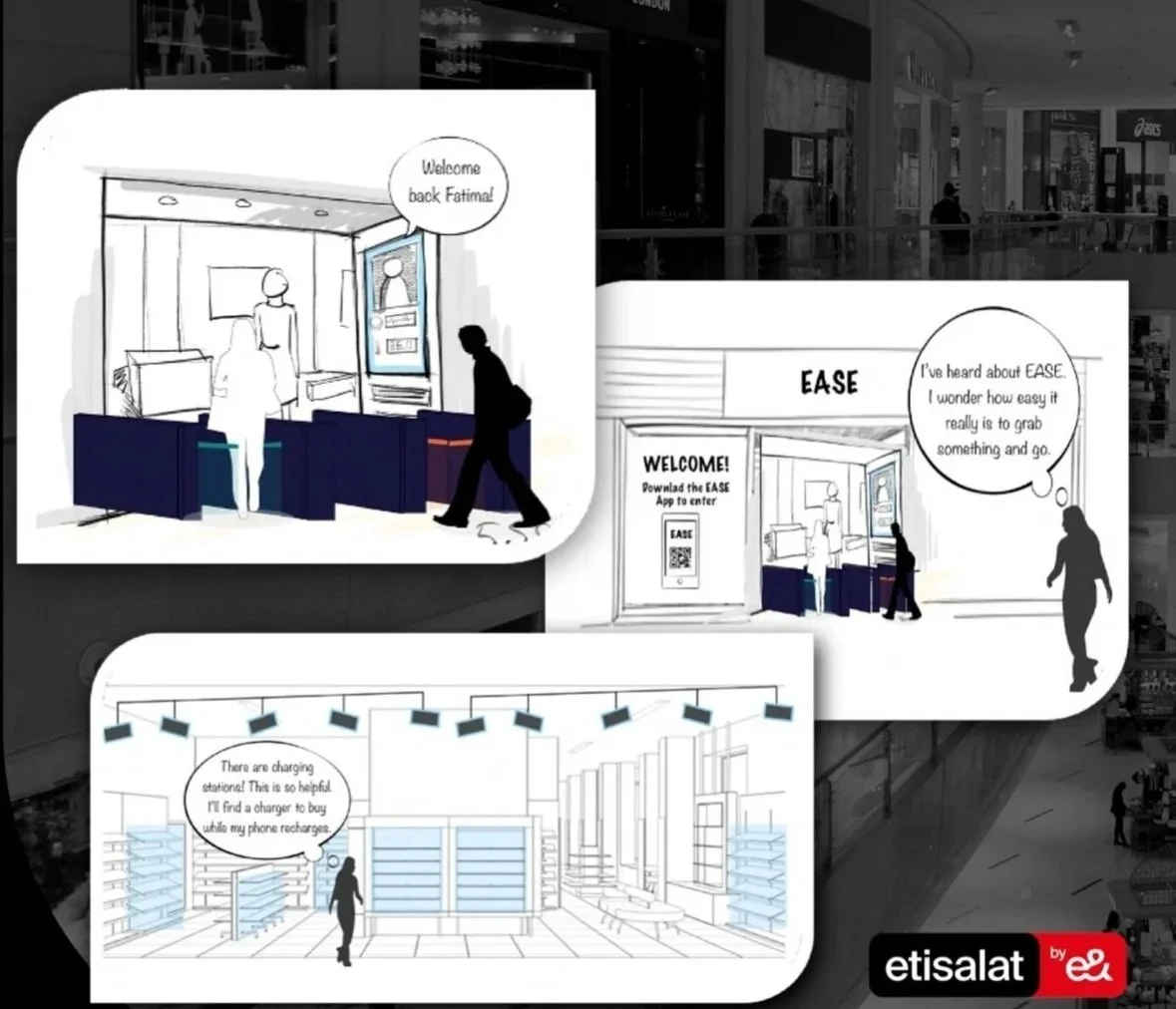
Illustrations created by Jess Lowry
Designing the Human System Behind an Autonomous Store
How I led the human-centered strategy that connected AI, IoT, robotics, and operations into a cohesive autonomous retail experience.
At a glance
Client: Etisalat
Employer: Amdocs Studio
My role: Strategy Director
Engagement: Three-month competitive proposal
Scope: Two autonomous retail pilots inside UAE shopping malls
Outcome: Amdocs won the engagement against Accenture
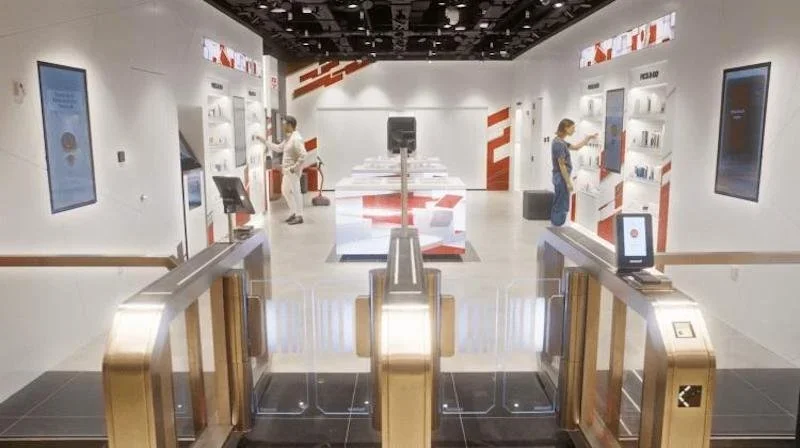
Image created by Etisalat
The challenge
Making multiple technologies behave like one service
The client wanted to launch two autonomous telecom stores where customers could enter, explore products, and complete purchases without a cashier.
The proposed experience brought together computer vision, smart shelves, identity verification, mobile services, automated payments, product lockers, and other hardware. Different teams and vendors owned different parts of the system, but customers would experience the store as one continuous service.
The challenge was to determine how the customer experience, physical environment, digital interactions, automated decisions, and operational work would function together before implementation began.
My role
Leading the human-centered strategy
As Strategy Director, I led the human-centered and systems-strategy work for the proposal.
My role was to develop a shared understanding across business stakeholders, experience teams, architects, engineers, operations specialists and technology vendors—and translate that understanding into an actionable operating strategy.
I designed and facilitated the research and collaborative process, created the end-to-end operating-system service blueprint, and translated the findings into requirements for the proposal and Statement of Work.
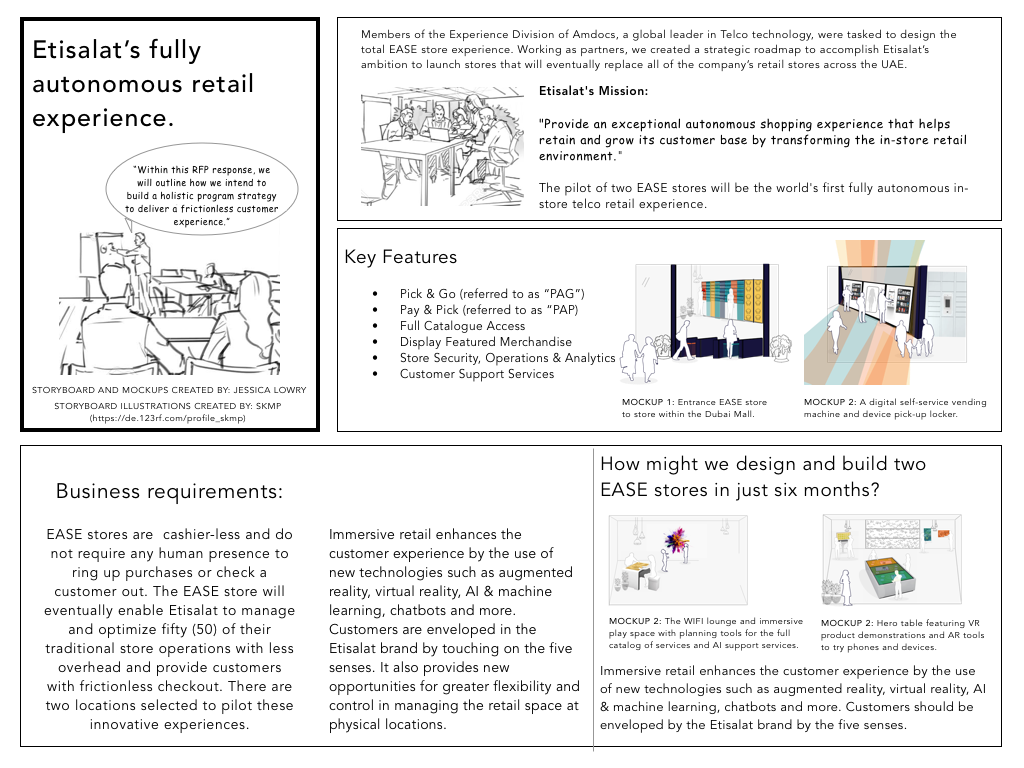
Storyboard and mockups created by Jess Lowry
The research
Bringing together knowledge distributed across the system
No individual stakeholder understood the entire autonomous retail system.
Business leaders understood the ambition. Vendors understood their technologies. Architects and engineers understood particular integrations. Operations and experience teams understood different parts of how the store would need to function.
My research approach brought these perspectives together through:
Stakeholder interviews
Expert workshops
Co-design sessions with key stakeholders
Participatory working sessions with vendors and technical specialists
Storyboards used in collaborative role-play
Research, synthesis and design happened together. Emerging findings were represented visually, brought back to participants and refined through subsequent working sessions.
This allowed the team to surface competing assumptions, undefined responsibilities and technical dependencies while there was still time to address them in the proposal.
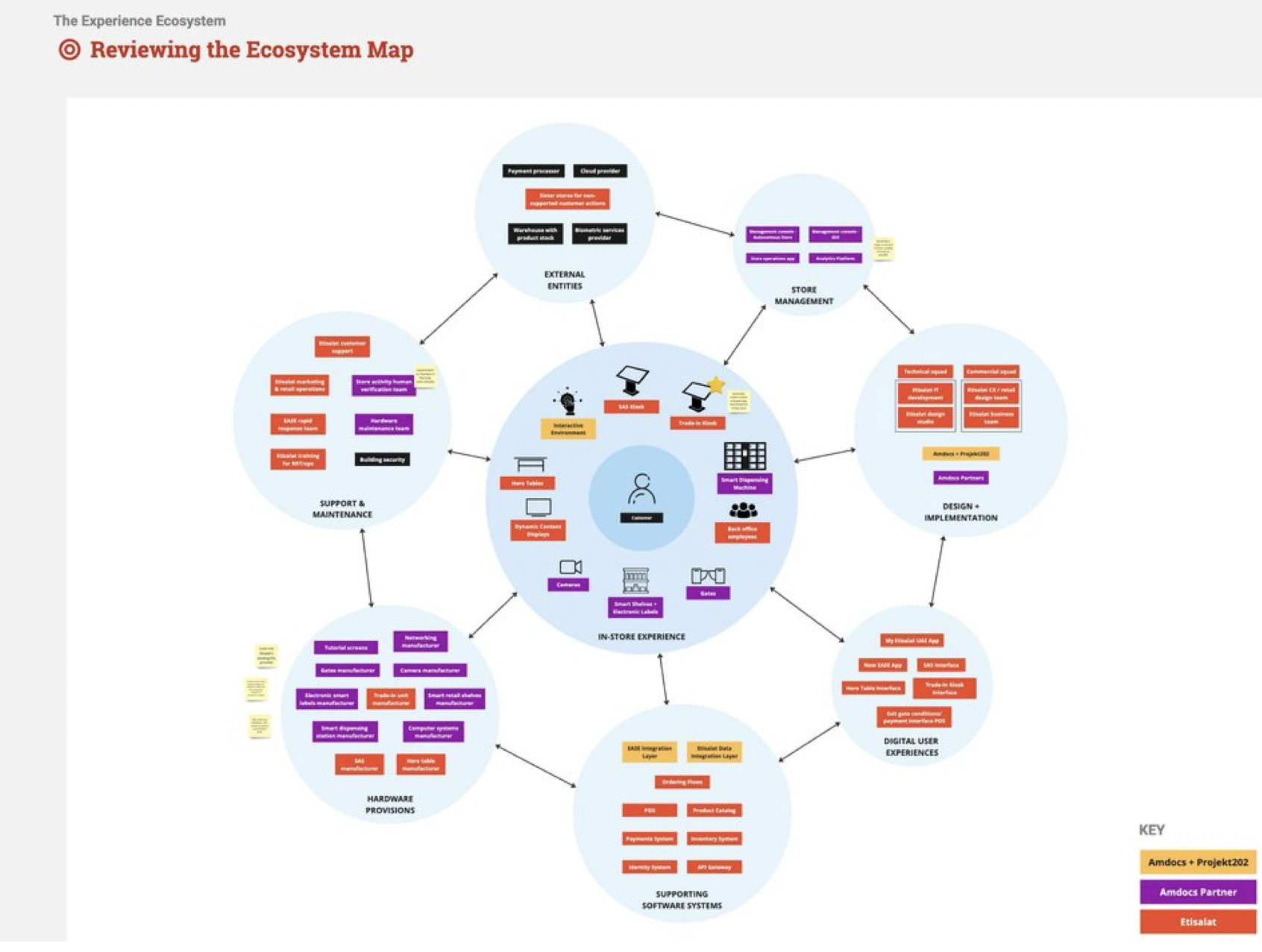
Ecosystem map and workshop materials created by Jess Lowry (MIRO)
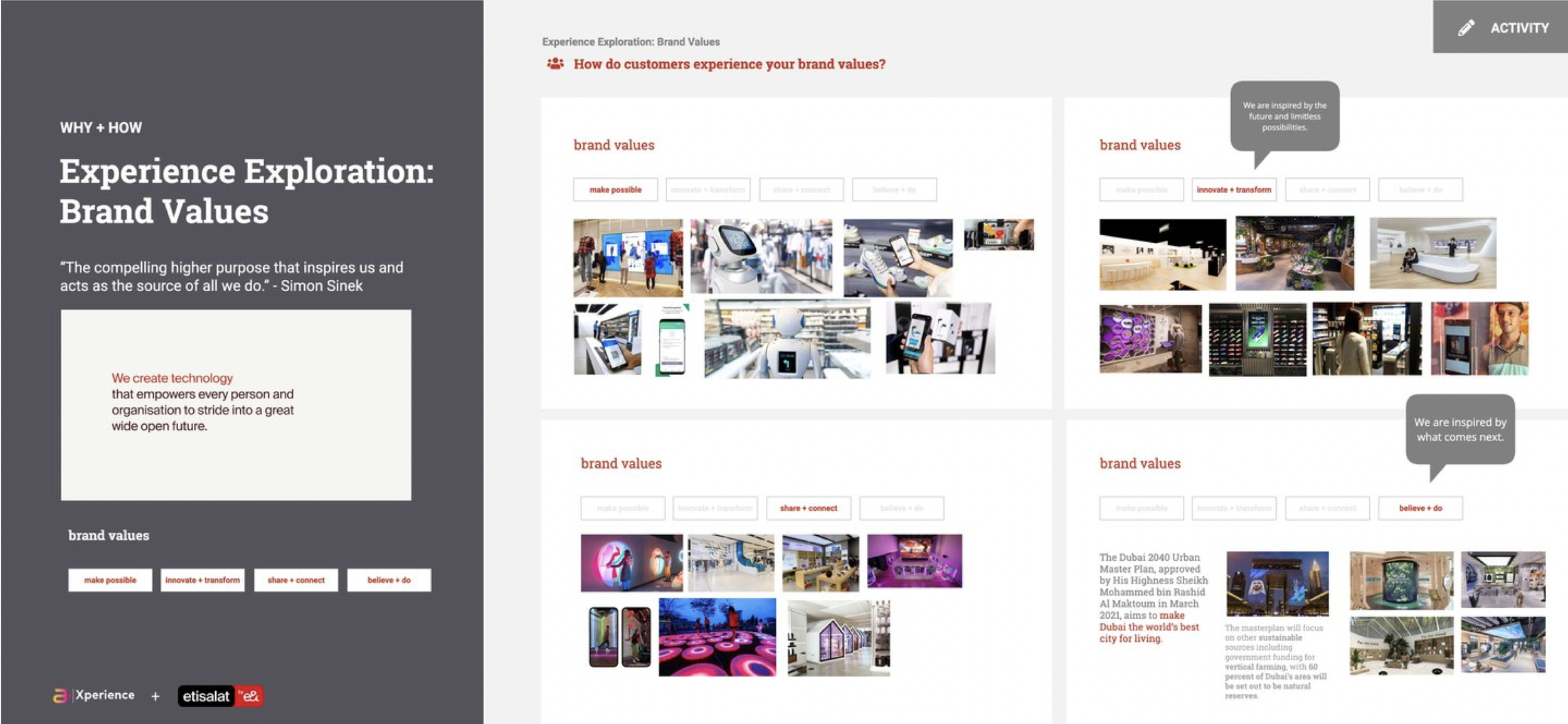
Images and workshop materials created by Jess Lowry (MIRO)
Stress-testing the experience
I created storyboards representing different customer and transaction scenarios and used them during role-play sessions with stakeholders and experts.
One followed a new customer entering the store, establishing an account, verifying their identity, and making a straightforward purchase. Another followed an existing subscriber completing a more complex device and service-plan upgrade involving payment, trade-in, and locker collection.
Acting out these experiences helped the team examine:
What information customers would need
How identity and access would move across systems
Where responsibility passed between vendors
What happened when an automated step failed
When remote support or human intervention was required
How the experience would recover without a cashier present
The storyboards were not substitutes for customer research. They were collaborative tools to make assumptions visible and evaluate how the proposed operating system would behave.
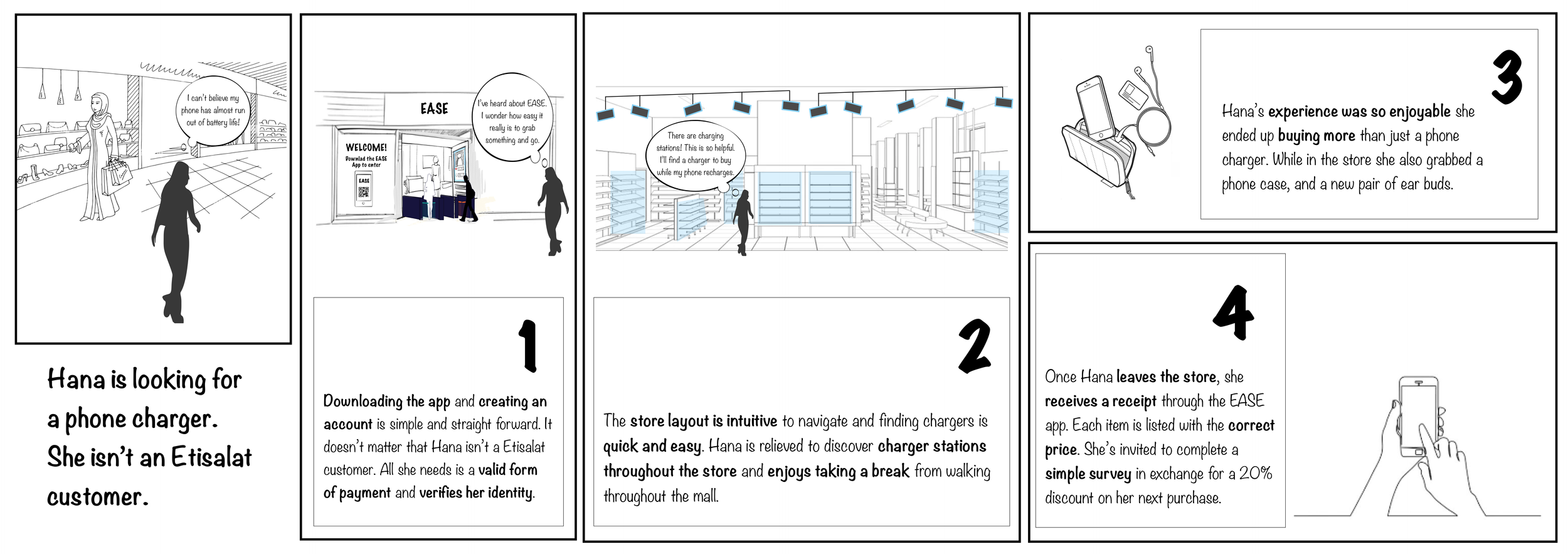
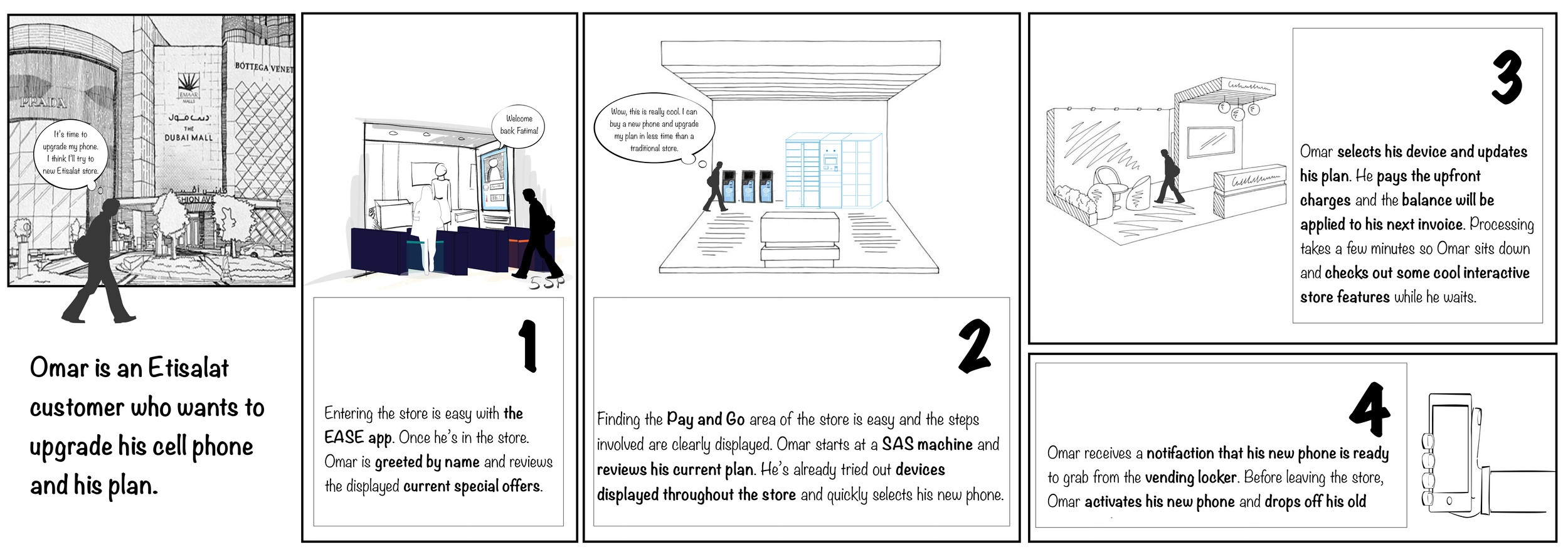
Storyboards created by Jess Lowry
The insight
Automation relocated the human work
Removing the cashier from checkout did not eliminate human work. It redistributed that work across inventory replenishment, monitoring, maintenance, customer support, technical escalation, and emergency intervention.
Every failure that an employee might previously have noticed and resolved inside a store now required:
A way to detect the problem
A team or vendor responsible for responding
The information required to understand it
A defined escalation path
A way to restore the customer experience
The greatest risk was not any individual technology. It was what happened between technologies, vendors, and operational teams.
The response
Making the end-to-end operating system visible
I led the co-creation of a service blueprint that connected the visible customer journey with the systems and work required behind the scenes.
The blueprint mapped:
Customer actions and physical touchpoints
Mobile and in-store interactions
Identity, entry, and payment systems
Automated decisions and hardware behavior
Vendor handoffs and technical integrations
Inventory and replenishment
Monitoring and customer support
Failure recovery and escalation
Human intervention and operational ownership
The blueprint gave business, experience, and technical teams a shared model of the proposed service. It showed how each contributor’s work affected the complete experience and exposed gaps that individual components could not reveal.
The team translated these findings into system requirements, vendor responsibilities, testing scenarios, support expectations, and contractual language.
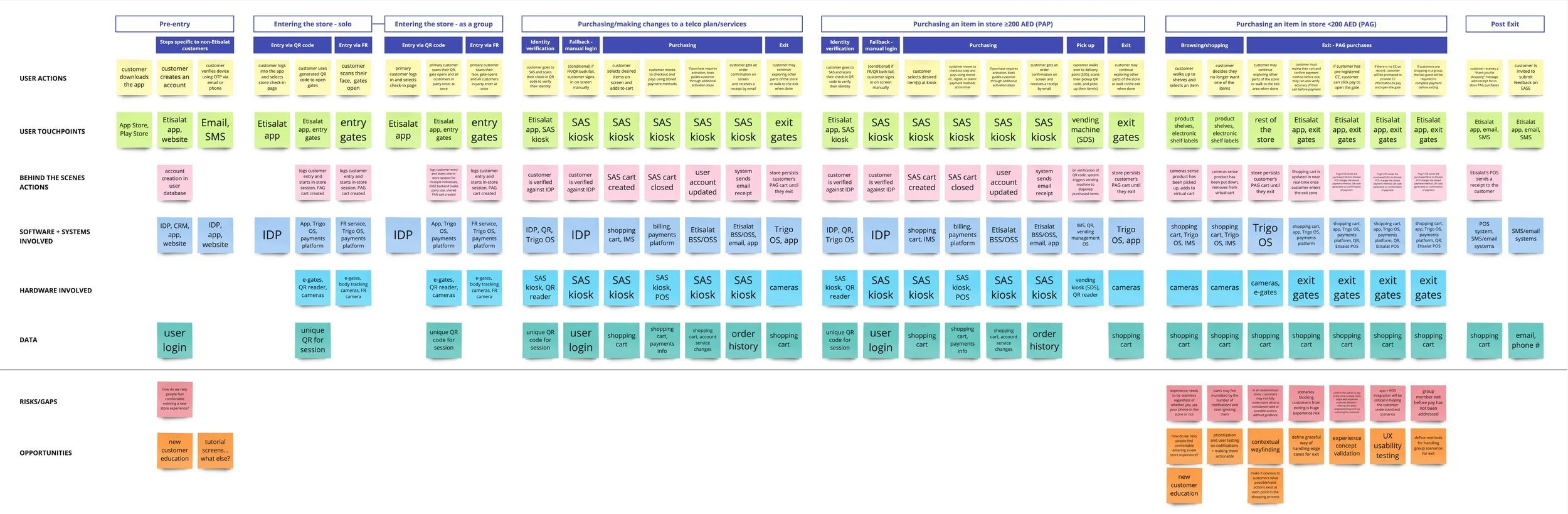
Service Blueprint created in MIRO through co-design sessions with stakeholders and experts.
The outcome
A shared strategy for moving from concept to implementation
The proposal presented more than a collection of autonomous retail technologies. It demonstrated how the complete service would operate across customers, physical space, digital systems, vendors, and operational teams.
The research and resulting artifacts created a shared foundation for:
Evaluating the proposed solution
Aligning stakeholders and vendors
Defining ownership and responsibility
Planning integration and testing
Identifying risks before implementation
Preparing teams to operate and support the stores
Amdocs won the engagement in a competitive bid against Accenture.
My role concluded at the bid award. Amdocs’ regional delivery teams led the post-award implementation.
Video created by Etisalat in partnership with Amdocs
What I carried forward
You can't design an autonomous store as a physical environment, customer interface, or technology platform in isolation. The experience depends on the people, decisions, workflows, and systems behind it.
This engagement reinforced a principle that continues to shape my work:
The visible experience and the operating system required to deliver it must be designed together.
Let’s work together
Building a team?
Connect with me about research and strategy leadership roles.
Transforming an organization?
Talk to ENID Studio about a research, systems design, or operations engagement.