
Designing a More Connected Digital Workplace
How I collected employee research to develop a phased intranet roadmap for EPA Victoria, an environmental regulator operating across offices, regions, and specialist teams.
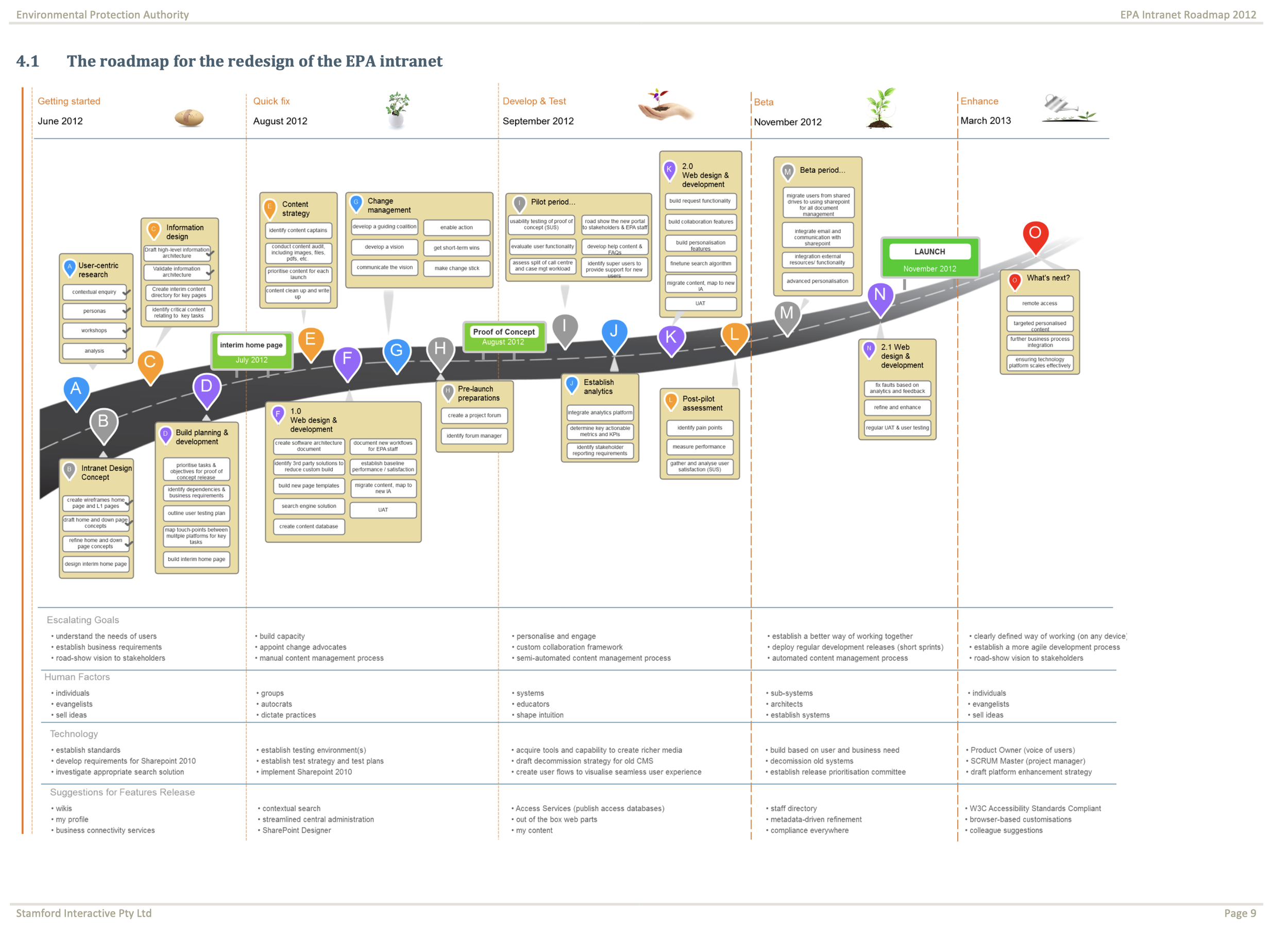
Roadmap artifact by Jess Lowry
At a glance
Client: Environmental Protection Authority (EPA) Victoria
Consultancy: Stamford Interactive
My role: UX Consultant
Year: 2012
Focus: Intranet research, information access, and collaboration
Methods: Stakeholder interviews, contextual inquiries, surveys, workshops, and focus groups
Key artifact: Future-state intranet strategy and roadmap
Outcome: A research-backed direction for improving how EPA staff find information, collaborate, and work across locations
The challenge
EPA Victoria’s intranet had grown into a collection of sites and information environments. Staff described difficulty finding current, reliable information and uncertainty about how content was managed. Collaboration tools felt complex, remote access was limited for some roles, and people often relied on manual workarounds to track tasks or share information.
The project began as research into the intranet. It expanded to examine how EPA staff interacted with technology across their working lives.
Research question
How could EPA create an intranet that helped staff access the right information, collaborate across teams, and do their work more effectively?
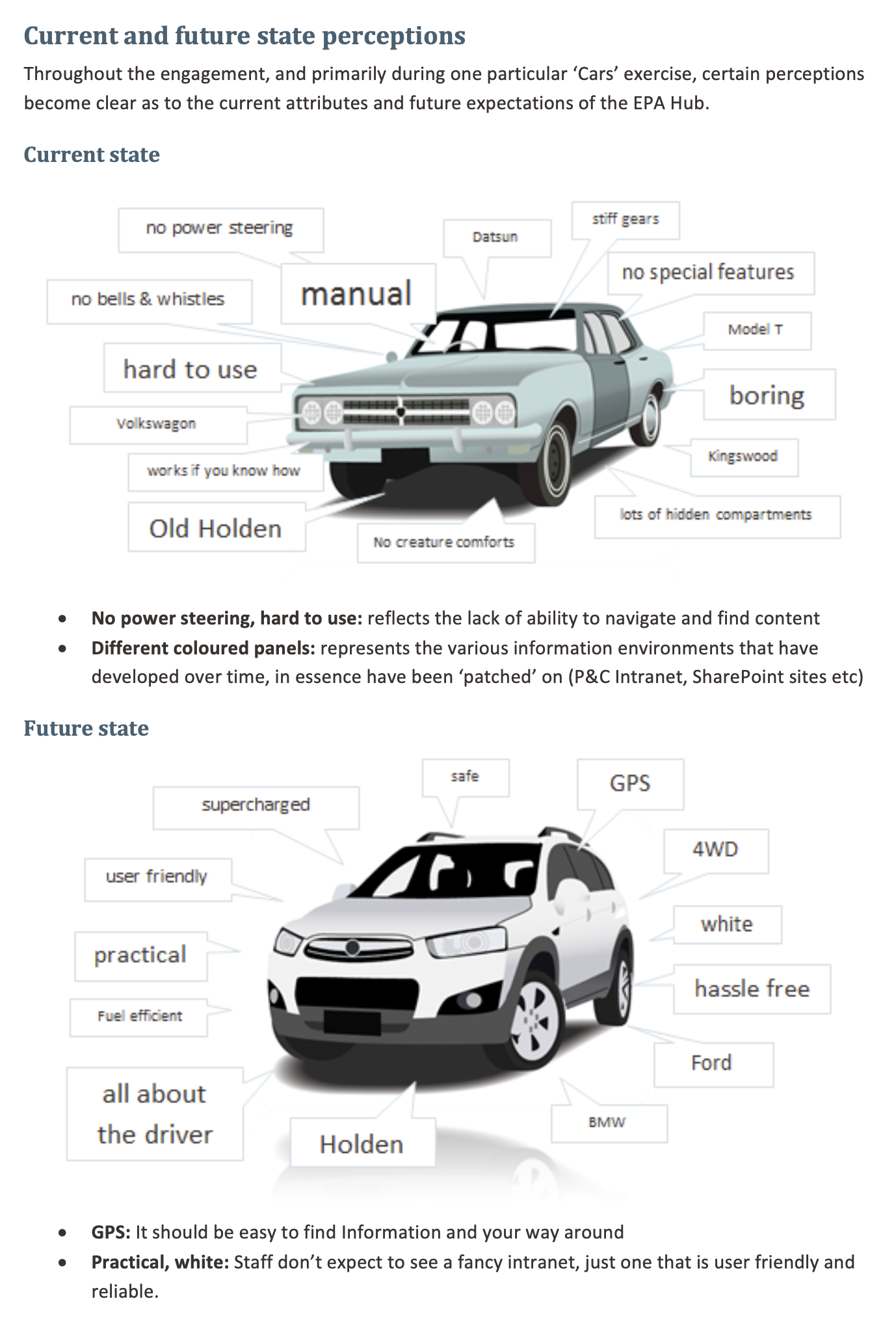
Image: Artifact co-created by cross-disciplinary group from across the organization.
My role
Project lead, UX research and strategy.
I led the work from research planning through recommendations and client presentation. I designed and conducted the research, with occasional support from a co-facilitator during sessions. I analyzed the findings using mixed-methods data coding techniques, then developed and presented recommendations with the client so the results could inform actionable decisions about the intranet’s future.
Photo credit: EPA Victoria
Research approach
I led a mixed-methods research program to understand both the intranet experience and the wider work it was meant to support. I combined stakeholder and user input with survey findings, task-based activities, and analysis of staff needs across different roles.
Stakeholder interviews and site visits helped establish business priorities and understand how work varied across EPA locations. Site visits included staff in Geelong, Macleod, and the Melbourne head office.
2.5-hour business requirements workshop brought together unit representatives and project stakeholders. Participants used a “current intranet as a car” exercise to describe the current experience and imagine a better one, then identified requirements aligned with EPA’s business drivers.
Follow-up requirements survey gathered feedback and helped prioritize requirements across six areas: a “one-stop shop,” staff directory, online collaboration, remote work, content strategy, and intranet attributes. It received 25 responses.
All-staff online survey received 109 responses. It asked how often staff used the intranet, how satisfied they were, what information and tools they needed, and what they wanted changed. It included both structured questions and open-text feedback.
Two two-hour user workshops explored everyday tasks, pain points, and opportunities. Participants sketched homepage concepts, discussed and revised their ideas, mapped task flows, and prioritized potential improvements.
Five role-based focus groups explored the work of administrators, communications officers, researchers, field officers, and regulatory officers. In 2.5-hour sessions, participants examined task frequency, the systems and channels they relied on, what worked, where they struggled, and what could improve.
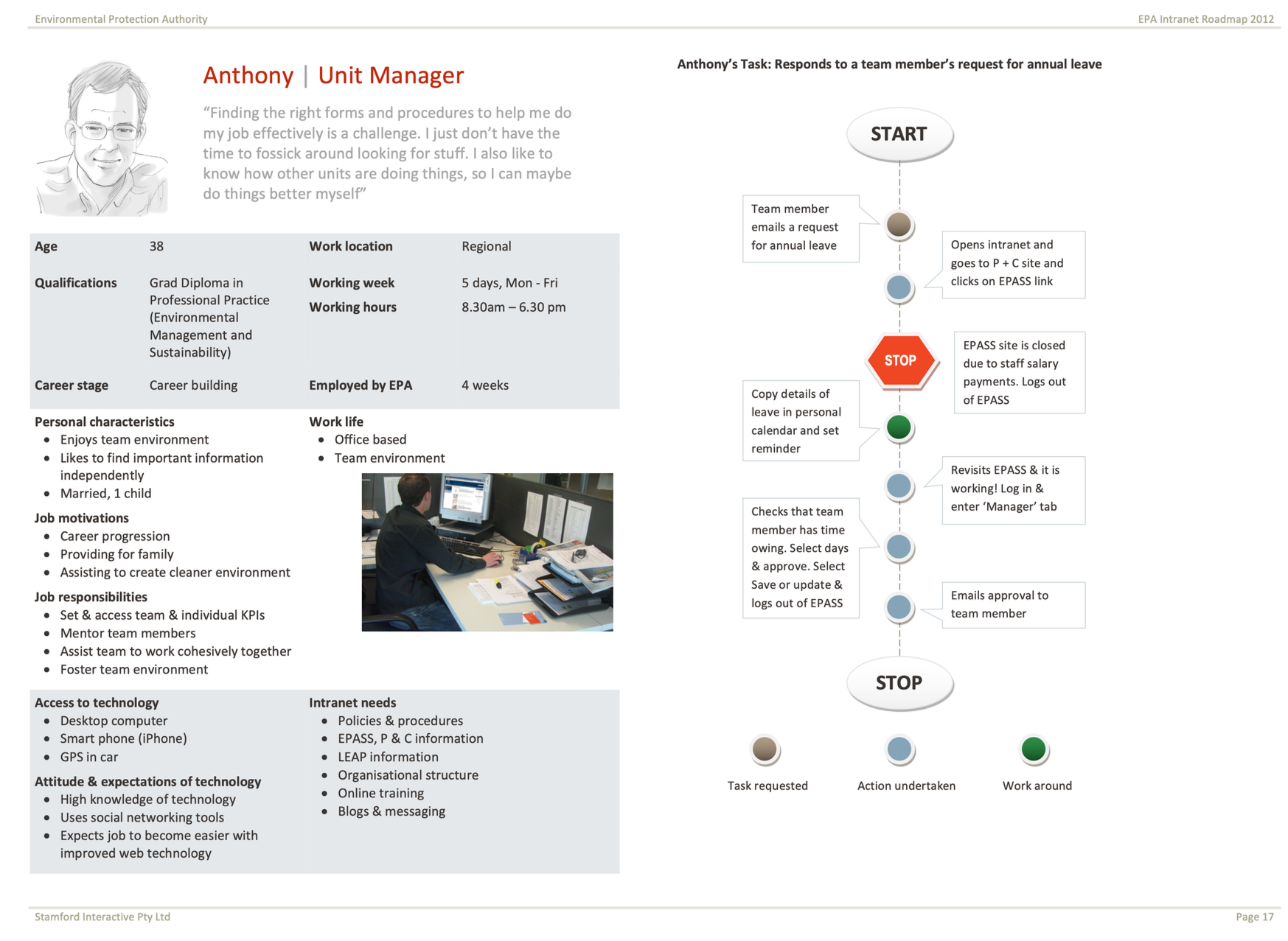
Image: Research artifact employee persona representing field officer from findings document.
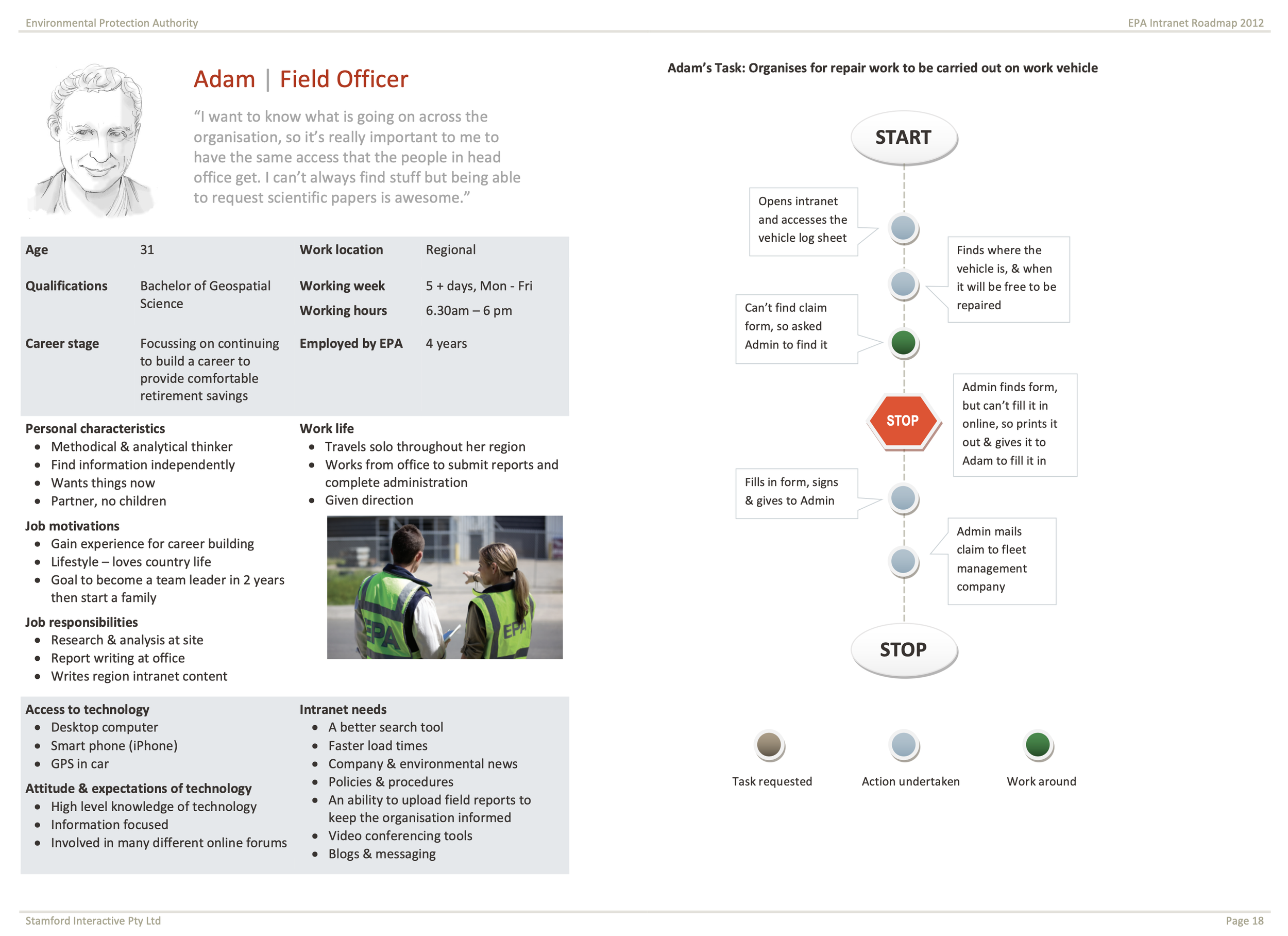
Image: Research artifact employee persona representing field officer from findings document.
I analyzed and coded the mixed-methods findings, using affinity diagramming to group strengths, weaknesses, and improvement ideas across the role-based sessions. I compared patterns across the research while retaining needs specific to particular roles. This helped connect individual intranet complaints to broader issues such as finding reliable information, working remotely, managing documents, collaborating, and tracking work.
What we learned
Staff faced connected problems: information was hard to find, and they were not always confident it was accurate or up to date. SharePoint collaboration had potential, but its complexity and lack of structure made it difficult to use. People working outside the office could struggle to access what they needed, while many teams tracked work through spreadsheets, email, calls, and other manual methods.
These were signs of a broader organizational challenge. The intranet needed a clearer purpose, a coherent strategy, and stronger ownership of content and governance. Creating shared information architecture also meant making sense of specialized terminology and different ways of describing work across EPA’s teams.
What the work produced
The research informed a future-state vision and a phased roadmap for the EPA Hub. The roadmap set out how EPA could improve the intranet over time, including clearer information organization, more useful content, improved collaboration, better support for remote staff, and a more consistent approach to governance and change.
The proposed aim was a reliable shared source of information that helped staff communicate, collaborate, and find what they needed.
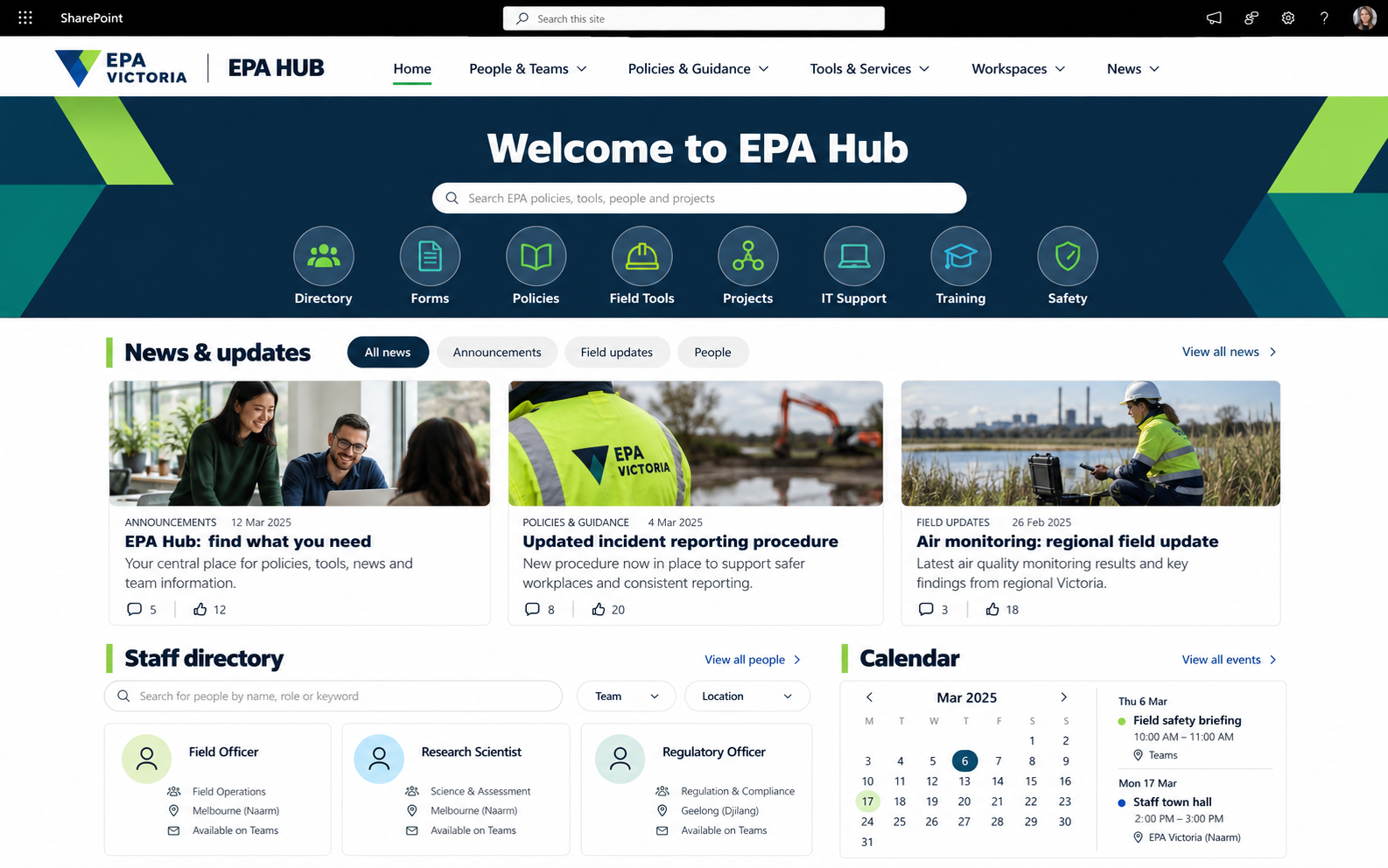
Image: Recreation of the EPA Victoria Hub based on 2026 branding
Why it matters
EPA Victoria’s work depends on scientists, legal specialists, field officers, and administrators being able to use one another’s knowledge. Fragmented information made that coordination harder. Staff repeated work because previous advice and enforcement reasoning were hard to retrieve; they struggled to find expertise and relied on colleagues to complete tasks they couldn’t do remotely.
Creating a shared information architecture meant understanding how those groups worked and how their specialized language shaped the way they organized and searched for information. Through participatory research, staff helped identify common needs, preserve important differences, and shape improvements around their actual responsibilities.
The resulting roadmap connected technical requirements with the organizational conditions needed to sustain them: shared terminology, clear content ownership, reliable information, and access suited to different working environments. It gave EPA a basis for planning a digital workplace that could support coordination across the organization while reducing the burden of everyday workarounds.
This sociotechnical approach informs ENID’s work today: involving the people doing the work in designing technology, working practices, and responsibilities together, so organizational performance and people’s working lives improve together.
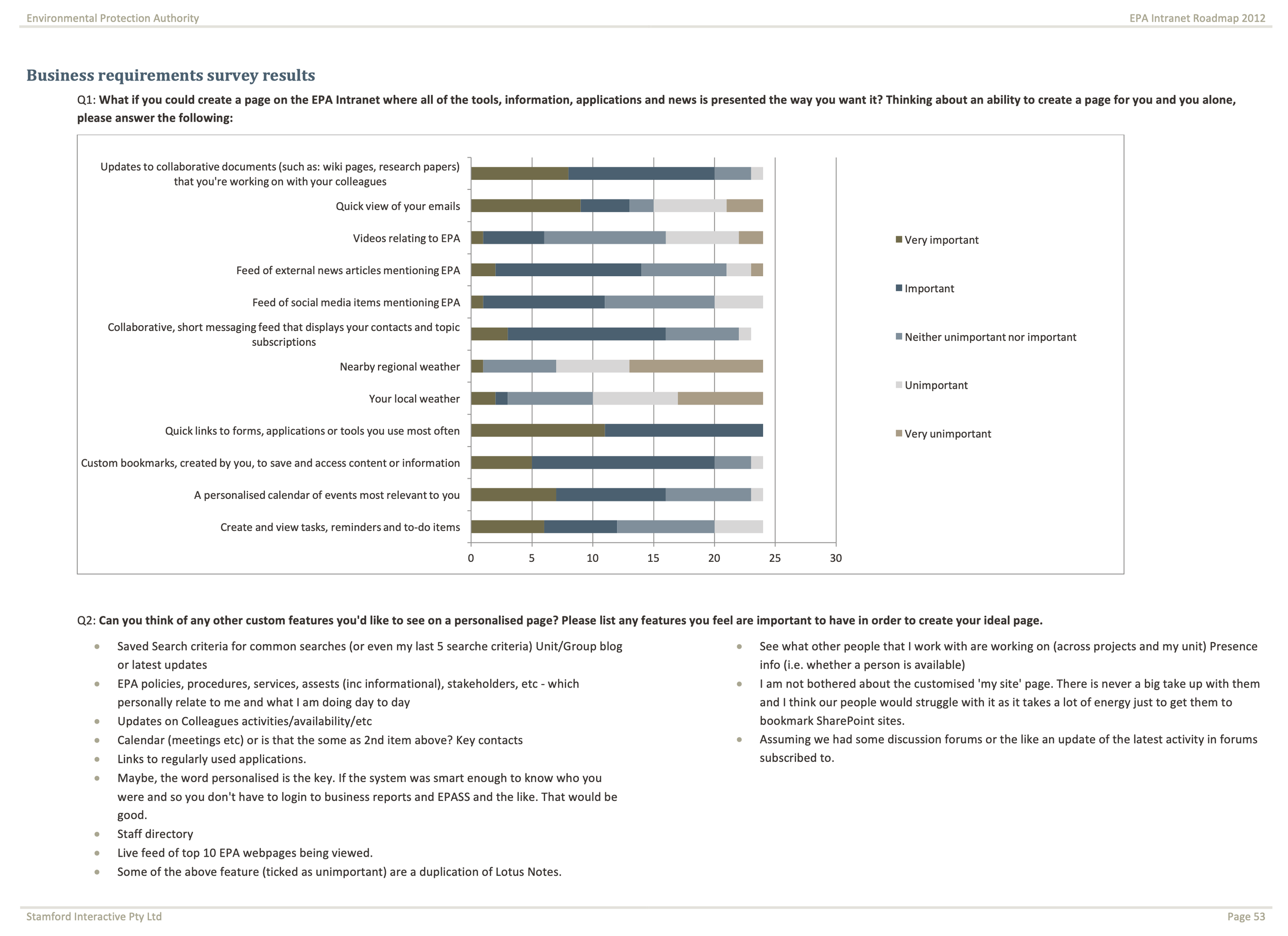
Image : Screenshot of survey results from research findings document produced by Jessica Lowry
Let’s work together
Building a team?
Connect with me about research and strategy leadership roles.
Transforming an organization?
Talk to ENID Studio about a research, systems design, or operations engagement.