
Exploring the Future of Grocery Shopping
Foundational research and experience design for Coles in Australia
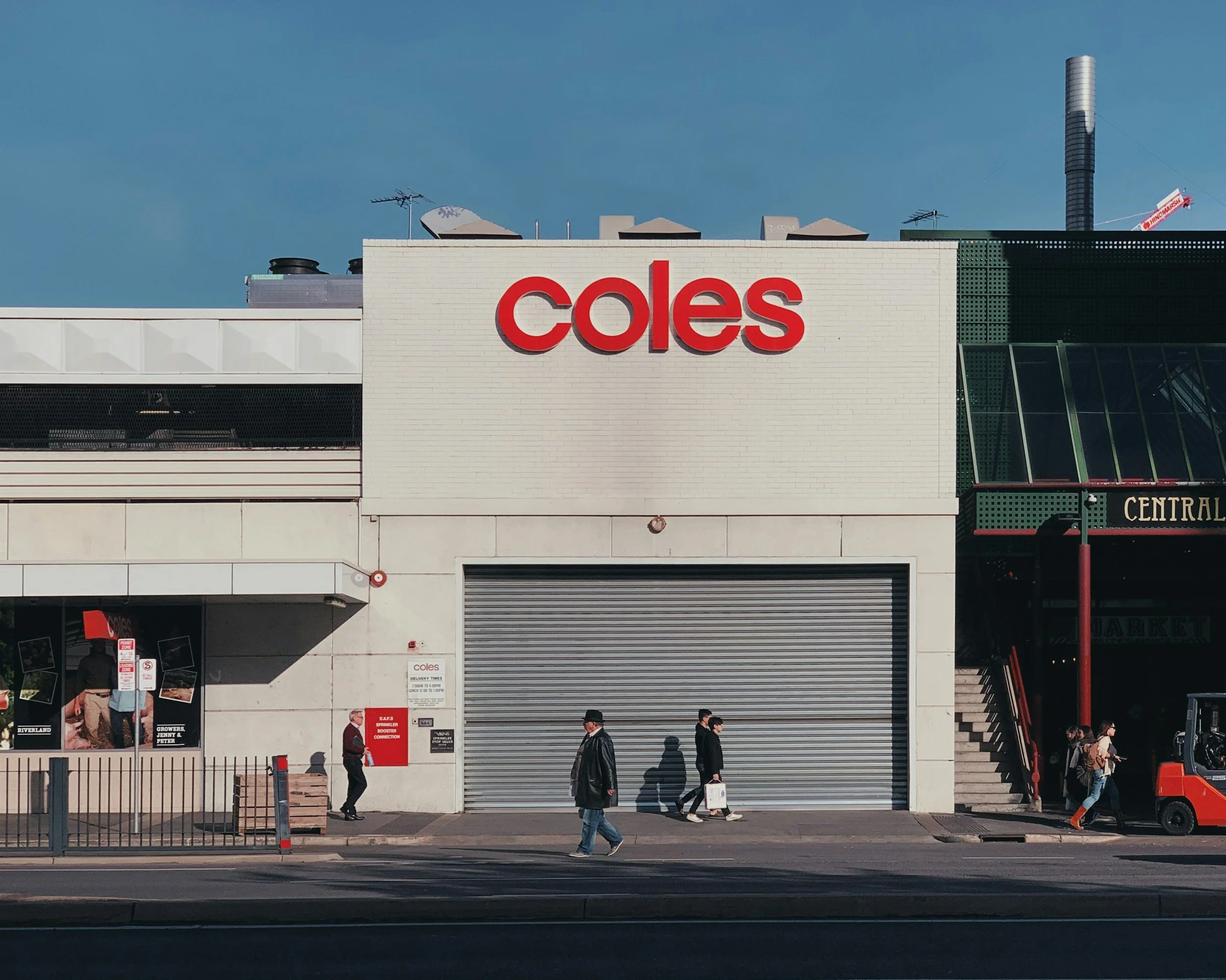
Stock photography via Squarespace.
At a glance
Client: Coles
Consultancy: Stamford Interactive, later acquired by PwC Australia
Role: Experience Design Researcher
Location: Melbourne, Australia
Focus: Future of retail, online grocery shopping and connected customer experiences
Methods: Desktop research, contextual inquiry, synthesis, stakeholder workshops, collaborative ideation and prototype testing
Key artifact: Interactive online grocery-shopping prototype
Outcome: A research-informed future experience tested with Coles customers
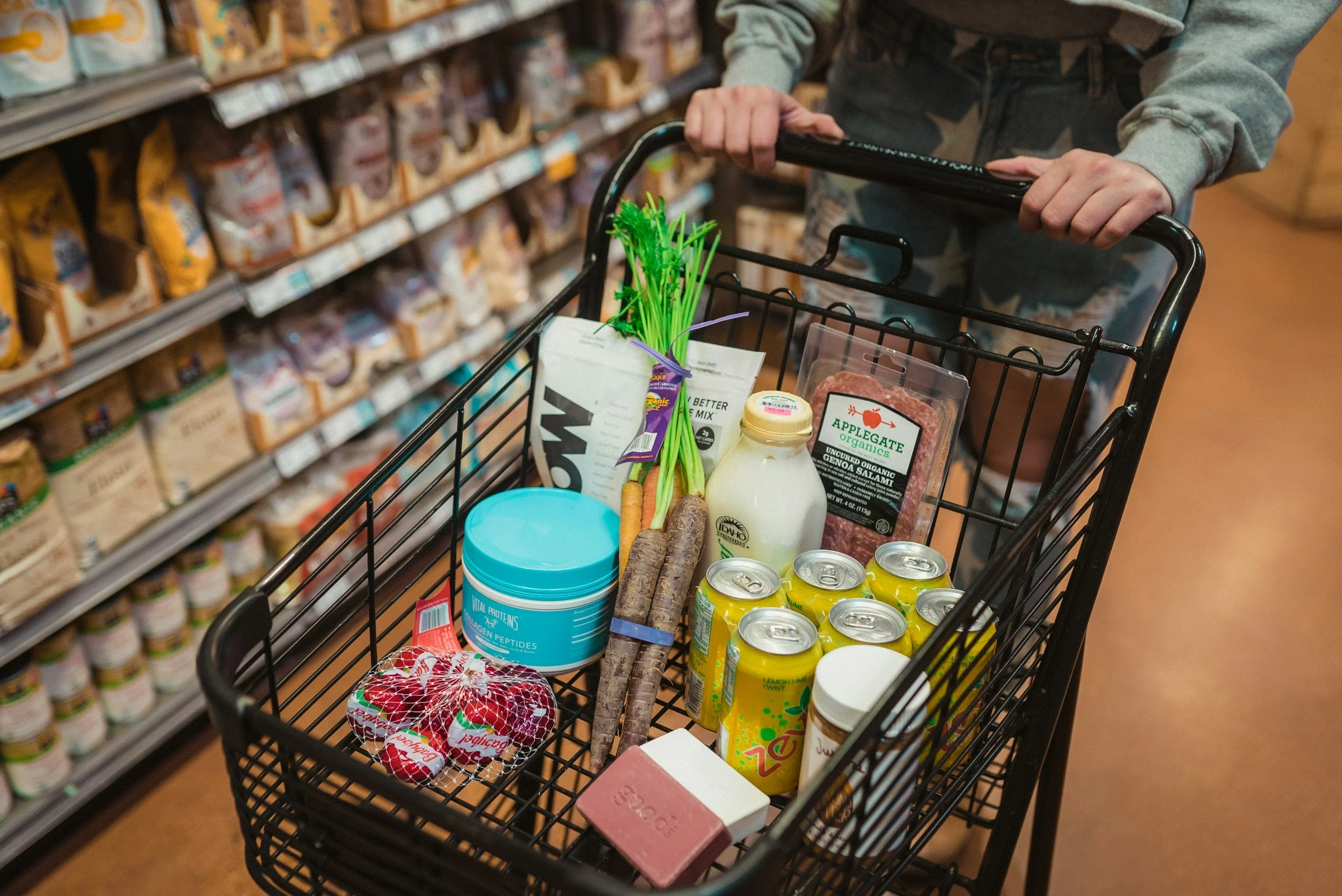
Stock photography via Squarespace.
The challenge
How might we elevate the shopping experience?
In 2012, online grocery shopping conventions had not yet been established. Customers had limited experience ordering groceries digitally, and retailers could not rely on familiar interaction patterns or established expectations.
The challenge was not simply to move products from supermarket shelves onto a website. Coles needed to understand what made grocery shopping engaging for customers and determine which parts of that experience could translate meaningfully into an emerging digital channel.

Stock photo credit: Torbjørn Helgesen
“How might Coles create an online grocery experience that reflects how people actually plan, shop, and make decisions?”
Research Question
My role
As an Experience Design Researcher at Stamford Interactive, I investigated the complete grocery-shopping journey and translated customer behavior into opportunities for a future online experience.
My work connected research, client decision-making, and prototype development. I participated in field research, synthesized the themes, presented our findings to Coles, contributed to collaborative concept workshops, and tested the resulting prototype with customers.
The research
Understanding an emerging category
I began with desktop research into what was being written and predicted about online shopping in 2012. This established the wider market context while revealing how little was known about how established grocery behaviors might translate online.
Following shoppers through the complete journey
I shadowed grocery shoppers beginning in their homes rather than meeting them at the store. This let me observe parts of grocery shopping that retailers rarely see.
I studied:
How people decided what they needed
How they prepared and created shopping lists
How they navigated the physical store
How they selected and compared products
How their plans changed while shopping
How they responded to promotions
How they checked out
How they transported, unloaded, and organized groceries
What they considered a good grocery-shopping experience
Following customers across environments revealed that grocery shopping wasn't a single interaction. It was a connected journey involving planning, memory, discovery, decision-making, physical effort, and household routines.
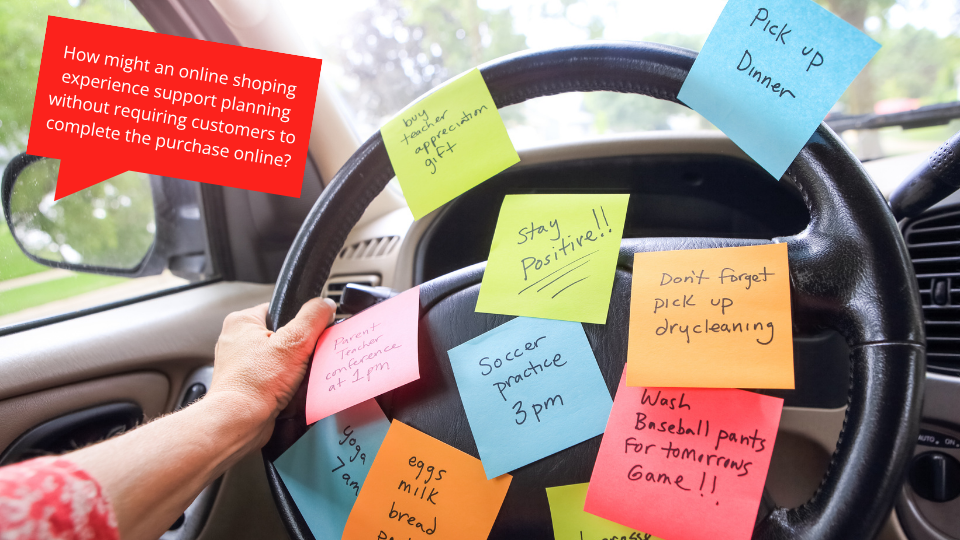
Representative image illustrating the contextual research approach. Stock photography via Canva.
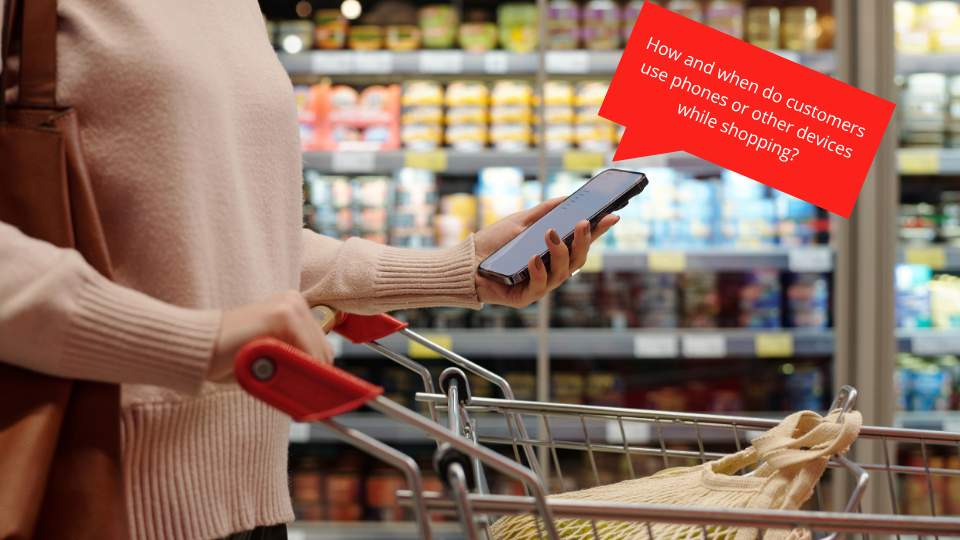
Representative image illustrating the contextual research approach. Stock photography via Canva.
The important insight
The future of grocery shopping could not be designed by treating the website and store as separate experiences.
Customers moved between their homes, personal routines, shopping lists, physical environments, promotions, products, and household responsibilities. A useful online service needed to support this larger system, not merely digitize the supermarket catalog.
Making sense of the research with Coles
Once themes emerged, we presented the findings to the client and worked with Coles stakeholders to explore their implications.
Collaborative workshops connected observed customer behavior with possible features and interactions. This gave the organization an active role in interpreting the research and ensured that prototype decisions could be traced back to customer evidence.
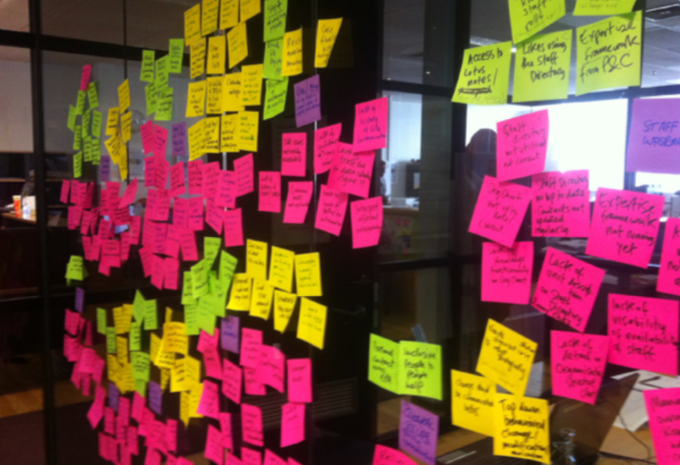
Photo credit: Jess Lowry, Stamford office research “war room”
Turning research into a testable experience
The resulting prototype explored a more dynamic and socially informed approach to online grocery shopping. Customers could see:
How many other shoppers were actively adding products to their carts
Which products appeared in active carts
The most popular products
Daily deals
Weekly offers
These features attempted to translate some of the activity, discovery and social awareness of a physical supermarket into an online environment.
Testing the concept with customers
We tested the prototype with Coles customers to understand whether the proposed experience made sense, supported shopping decisions and reflected what people valued about grocery shopping.
Testing moved the conversation beyond future predictions. It gave Coles direct evidence about how customers might respond before committing to building the experience.
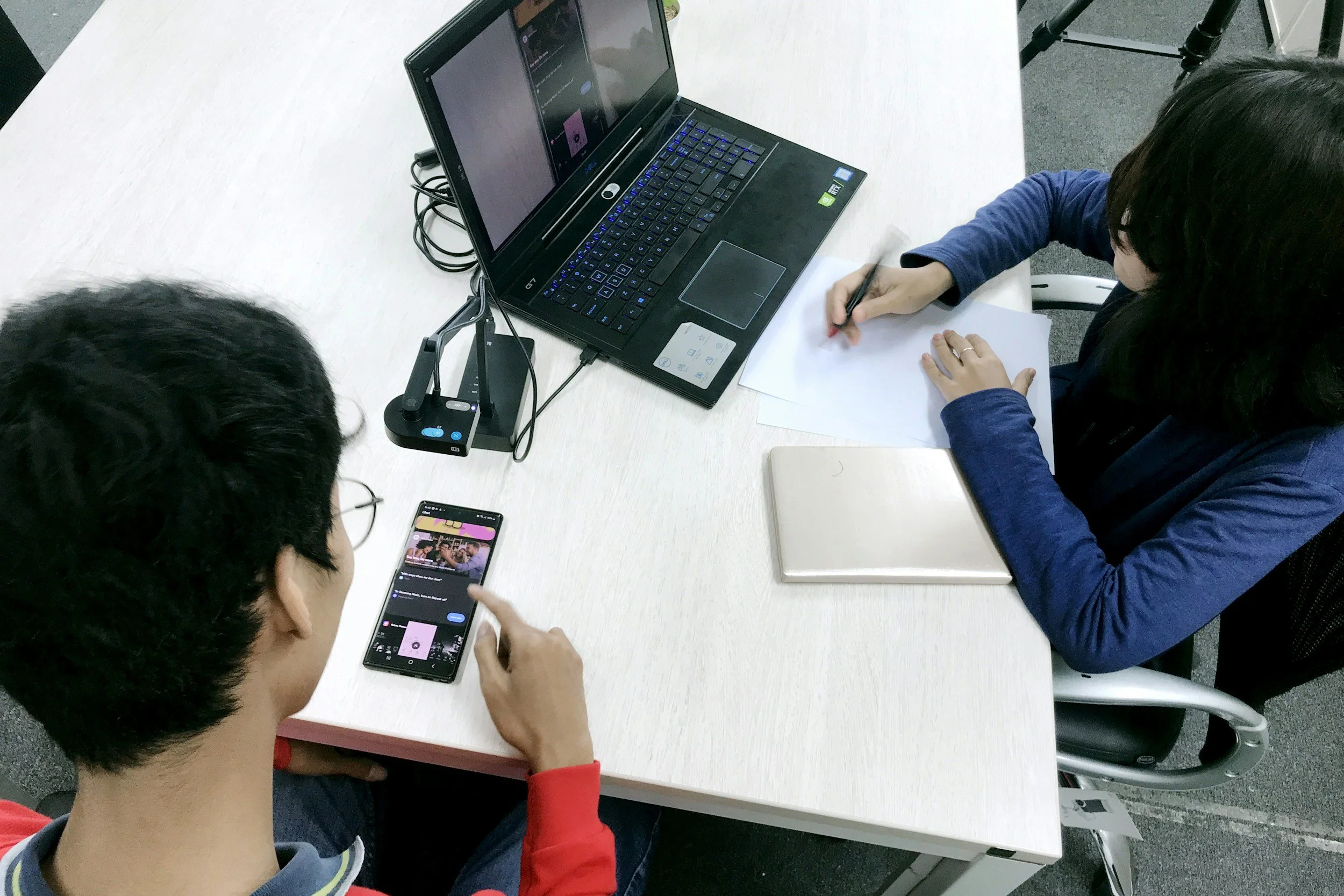
I conducted moderated usability testing in Stamford Interactive’s research lab using the Morae research suite, supplemented by activities in Optimal Workshop. This representative stock image does not depict the original Coles research session.
Stock photography via Squarespace.
The outcome
The project delivered a research-informed and customer-tested vision for online grocery shopping at a time when the category was still taking shape.
More importantly, it demonstrated that the future of retail can’t be understood by separating digital products from physical environments. By following people across the complete journey, we connected emerging technology with the routines, decisions, and expectations that already shaped grocery shopping.
From observed behavior to a tested retail proposition
Foundational research
Established how grocery shopping worked across the home, store, and journey between them.
Experience prototyping
Made a possible future tangible enough for customers and stakeholders to experience and evaluate.
Collaborative sensemaking
Facilitated the client in interpreting the research and developing ideas based on shared customer evidence.
Customer testing
Replaced assumptions about online shopping with evidence that could guide future investment.
What I carried forward
What would later be called an omnichannel experience was already a systems-design problem: how to connect people, information, technology, and physical operations across environments.
The project demonstrates the ability to investigate an unfamiliar future, uncover the behaviors that matter, align stakeholders around the research, and translate learning into a testable service proposition—without losing sight of the physical retail experience it depends on.
Let’s work together
Building a team?
Connect with me about research and strategy leadership roles.
Transforming an organization?
Talk to ENID Studio about a research, systems design, or operations engagement.