
Turning Customer Evidence Into a Shared Direction
How I built Cision’s first research practice and led a cross-regional transformation initiative.
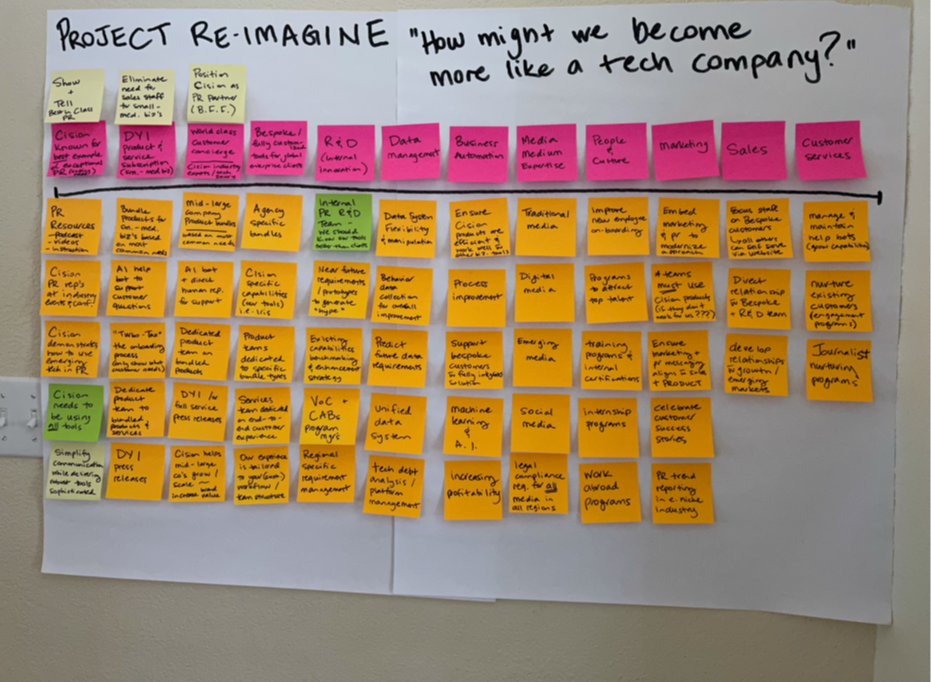
Photo and research artifact by Jess Lowry
At a glance
Company: Cision
Role: Director of Design Research
Leadership: Built and managed a team of six researchers
Featured initiative: Media Insights research and alignment
Reach: Senior stakeholders from the US and Europe
Methods: Interviews, surveys, process mapping, service blueprinting, and workshops
Contribution: Shared priorities, reduced duplication, and a phased improvement roadmap
The challenge
Cision had no internal design-research function when I joined. I built one from the ground up, hiring and managing six researchers while mentoring the wider design team.
The company had assembled multiple platforms, products and professional services through years of acquisitions. Although it sold sophisticated technology, it still operated largely like a media-services company.
The result was substantial technology debt, fragmented customer knowledge, and regional teams working with different processes, tools, and assumptions. As Cision consolidated or sunsetted legacy software, it needed to understand what customers and analysts actually depended on.
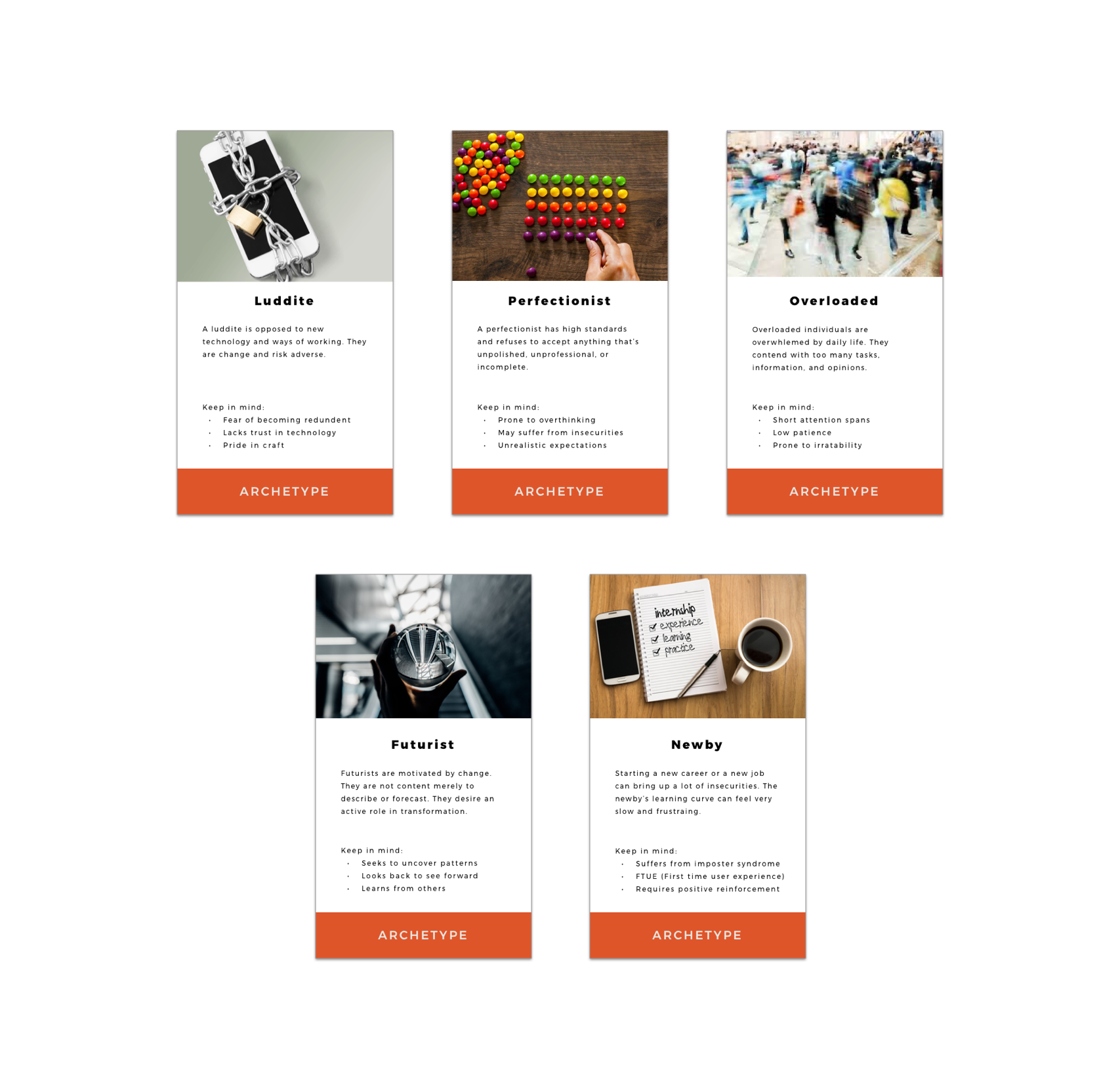
Cision end-user archetype cards created by Jess Lowry
My role
Leading by example
I didn’t build the research practice at a distance.
While overseeing research across Cision’s portfolio, she personally led the Media Insights initiative. My team shadowed how I work, learning how to build stakeholder trust, investigate an interconnected service, and translate evidence into decisions.
This practical apprenticeship allowed me to model the judgment and partnership expected of the new research function—not simply prescribe a process.
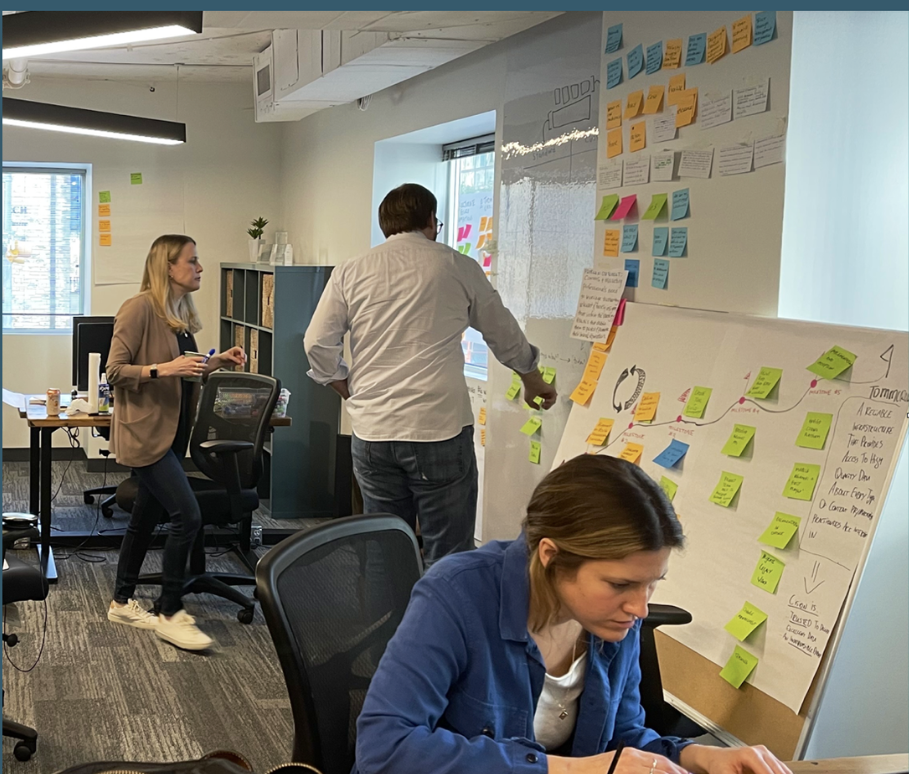
Photo taken by Jess Lowry in Austin during 3-Day Alignment Sprint
Earning permission to align the organization
A three-day alignment workshop followed 3+ months of close work with the Vice President of Media Insights and her team.
That investment built sufficient trust to bring senior stakeholders from Europe and the United States into one collaborative process. The workshop created space to examine regional differences without allowing them to become competing agendas.
Establishing a shared view of the service
Research included internal analysts, external customers and senior decision-makers. Jess combined interviews and surveys with pain-point analysis, process mapping, secondary research, and a service blueprint of the end-to-end Media Analysis experience.
The work asked three practical questions:
What is the current state of data and reporting?
What can be learned from previous improvement requests?
How might Cision create more useful and compelling data-visualization experiences?
The research found that analysts were working around disconnected tools, error-prone spreadsheets, email-heavy communication, and inconsistent training. Customers wanted modern, actionable metrics and reports that revealed meaningful patterns—not more data. They also valued Cision’s expert support and did not want every interaction replaced with self-service technology.
Connecting the findings to a future direction
Jess mapped how customers, analysts, tools, processes, and technologies worked together to deliver Media Insights. She also developed behavioral archetypes and workflows showing how needs changed according to job function, team structure, industry, and professional responsibilities.
These artifacts showed stakeholders that the opportunity was not simply a redesigned report. It was a better operating system for producing and delivering insight.
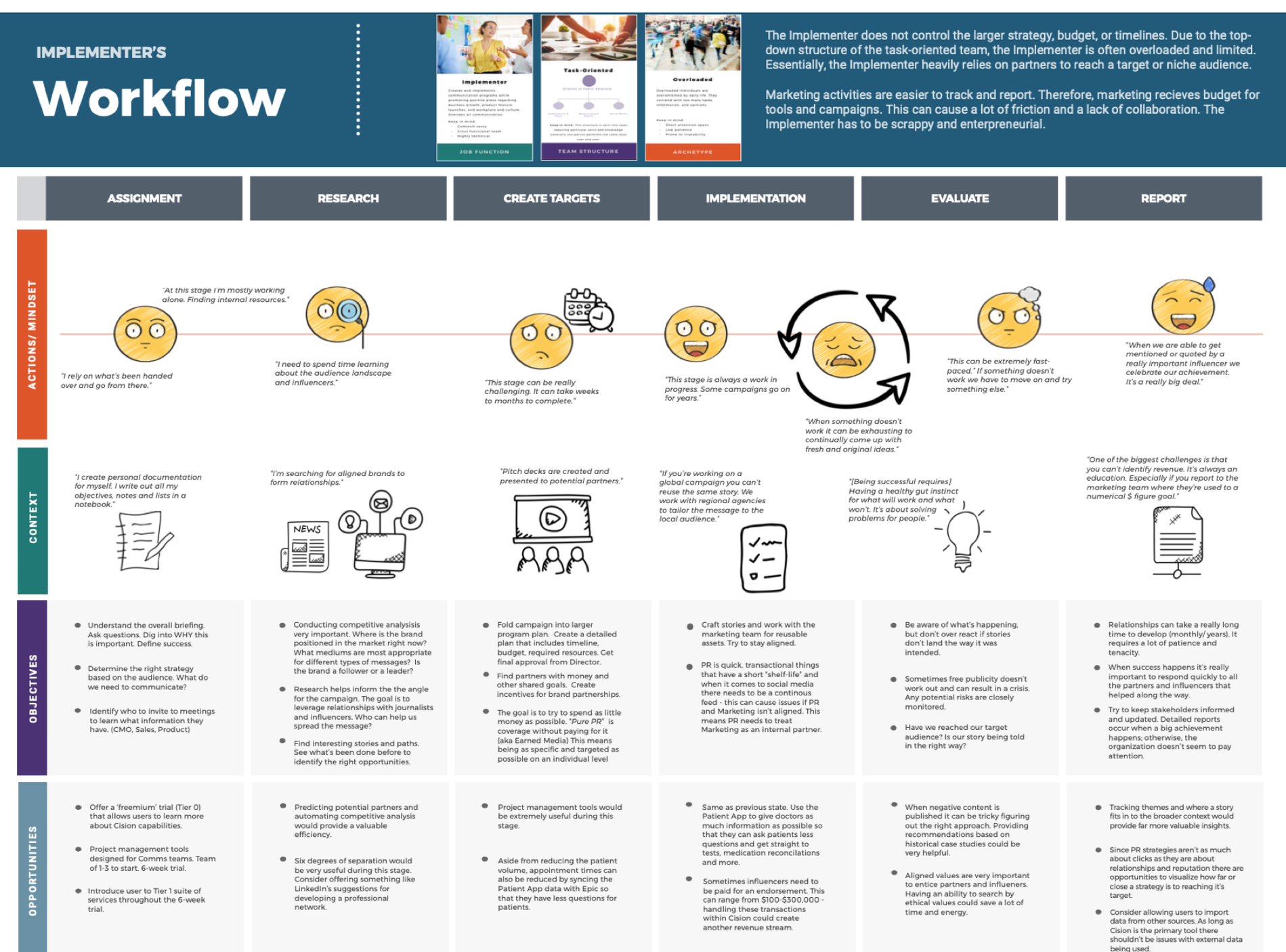
Image of experience map created by Jess Lowry (Keynote)
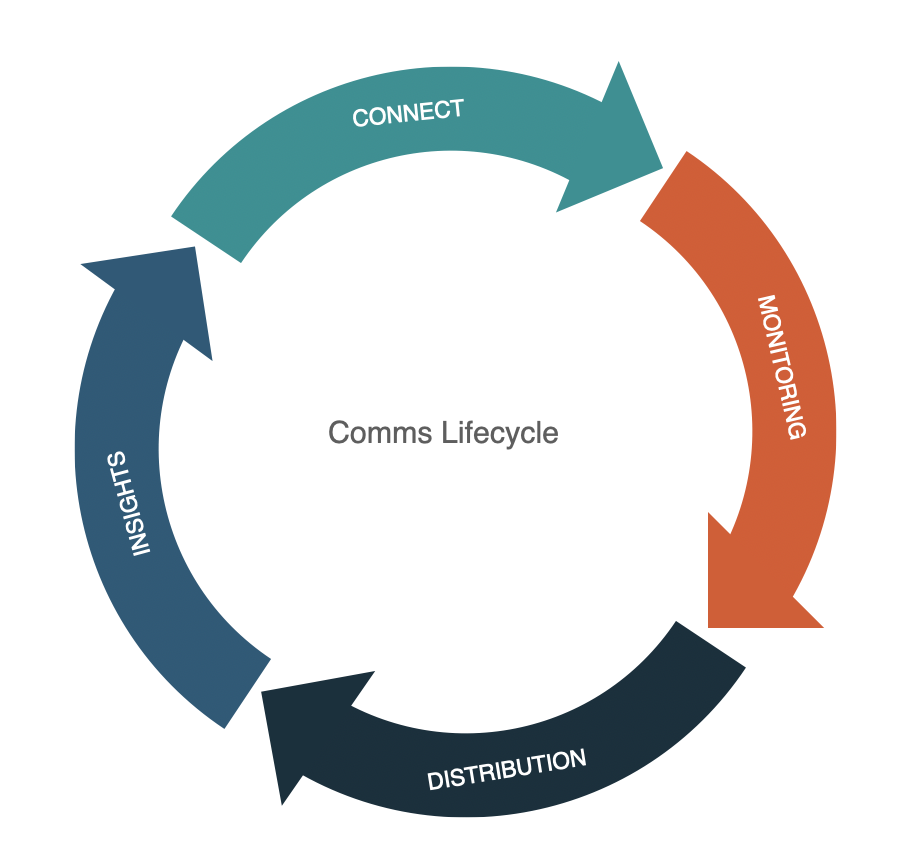
Image of workshop summary materials created by Jess Lowry (Keynote)
From alignment to action
During the workshop, senior stakeholders used the research to establish a shared vision:
Cision is trusted to deliver excellent data and is perceived as an indispensable partner.
The group translated that vision into three horizons:
Short term
Establish benchmarks and align customer and analyst priorities.
Mid term
Prototype new tools and processes, validate them with subject-matter experts, and incorporate feedback.
Long term
Create a scalable approach to automated insights supported by better training and collaboration.
Recommendations included standardized templates, a shared knowledge base, workflow improvements, more meaningful data visualization, and selective automation of repetitive tasks.
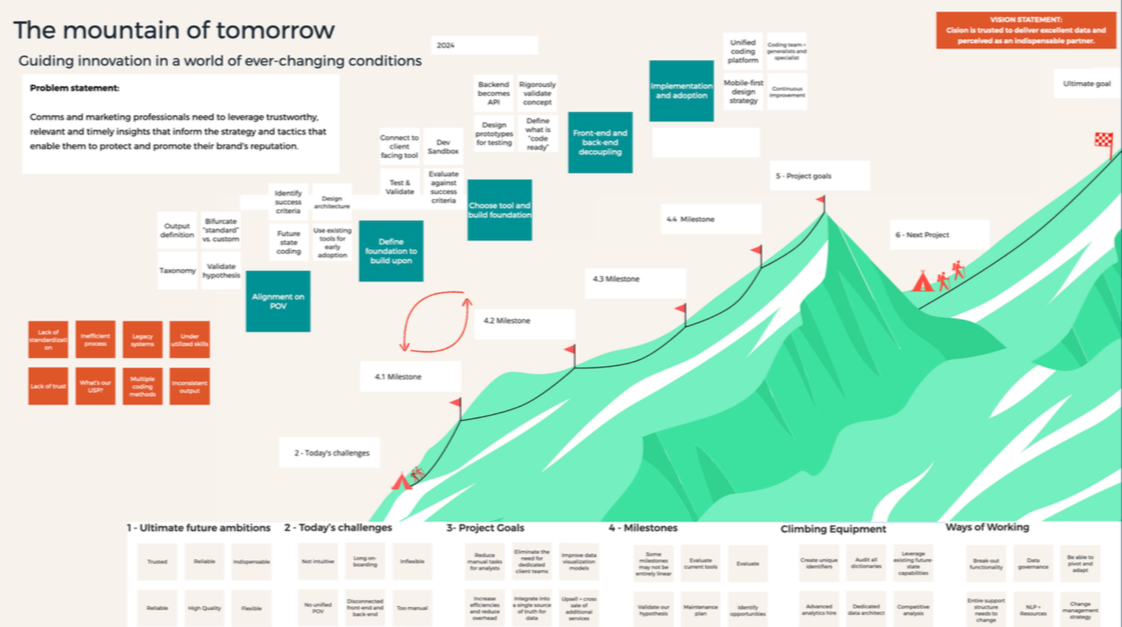
Image of transformation roadmap (MIRO)
What I carry foward
Leading by example and cultivating trust
I’m a hands-on leader who understands how to develop a new internal capability from the ground up.
I built trust before asking stakeholders to align. I examined the complete service rather than isolating the interface. I brought senior leaders across regions into a shared decision-making process. And I connected research findings to a practical roadmap spanning immediate improvements, experimentation, and longer-term transformation.
The outcome was more than a collection of artifacts. My contribution established a shared understanding of how to frame a problem, co-design alignment, and follow an evidence-based approach to digital transformation.
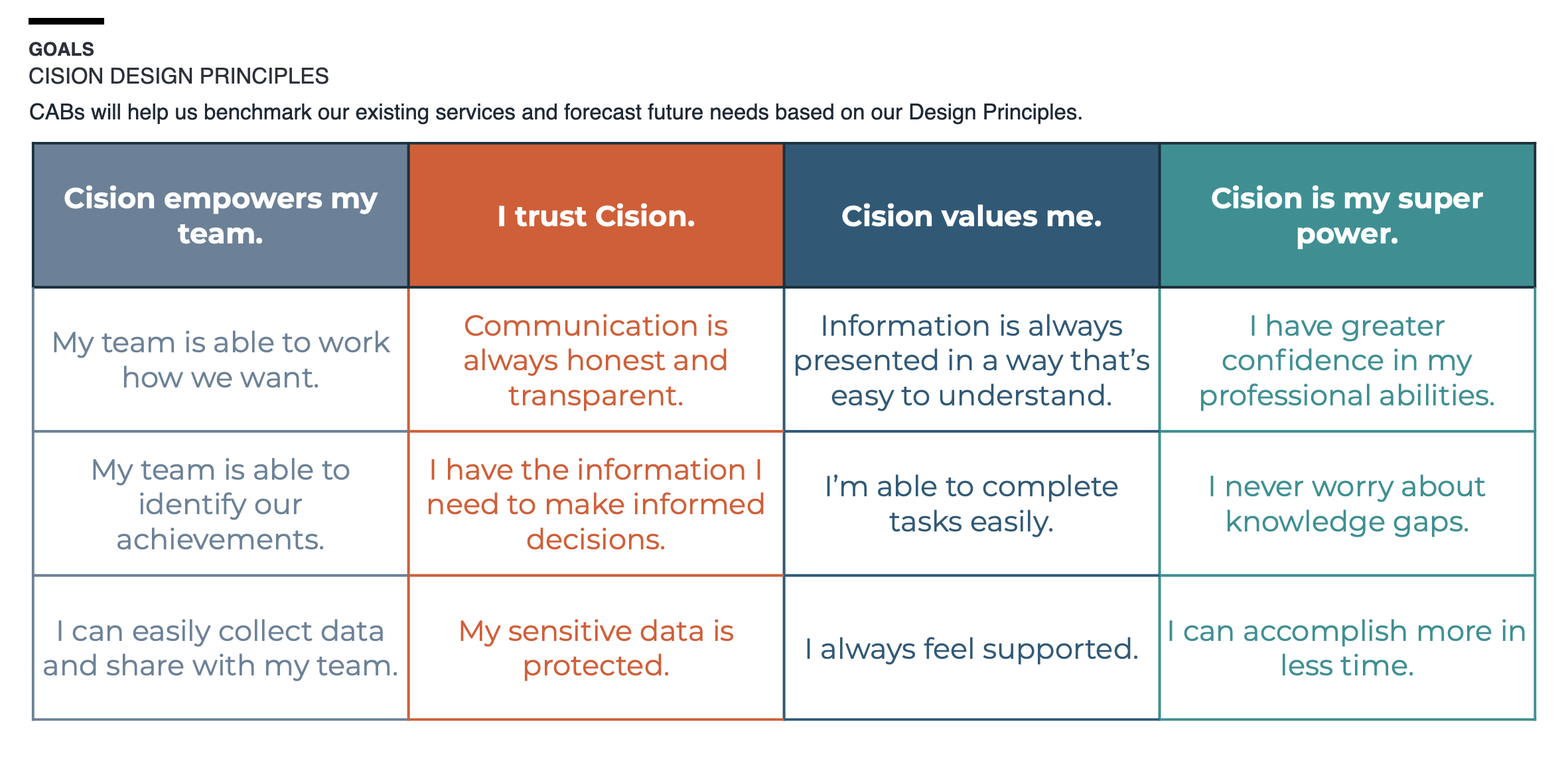
Image of design principles created by Jess Lowry (Cision)
Let’s work together
Building a team?
Connect with me about research and strategy leadership roles.
Transforming an organization?
Talk to ENID Studio about a research, systems design, or operations engagement.